What Is Generative AI in Software Testing? Complete 2027 Guide
Modern software teams ship code updates faster than ever before. Continuous deployment pipelines demand rapid verification without sacrificing application reliability.
Traditional testing workflows often struggle to keep up with aggressive sprint schedules. Writing comprehensive unit, API, and UI test suites manually consumes significant engineering hours.
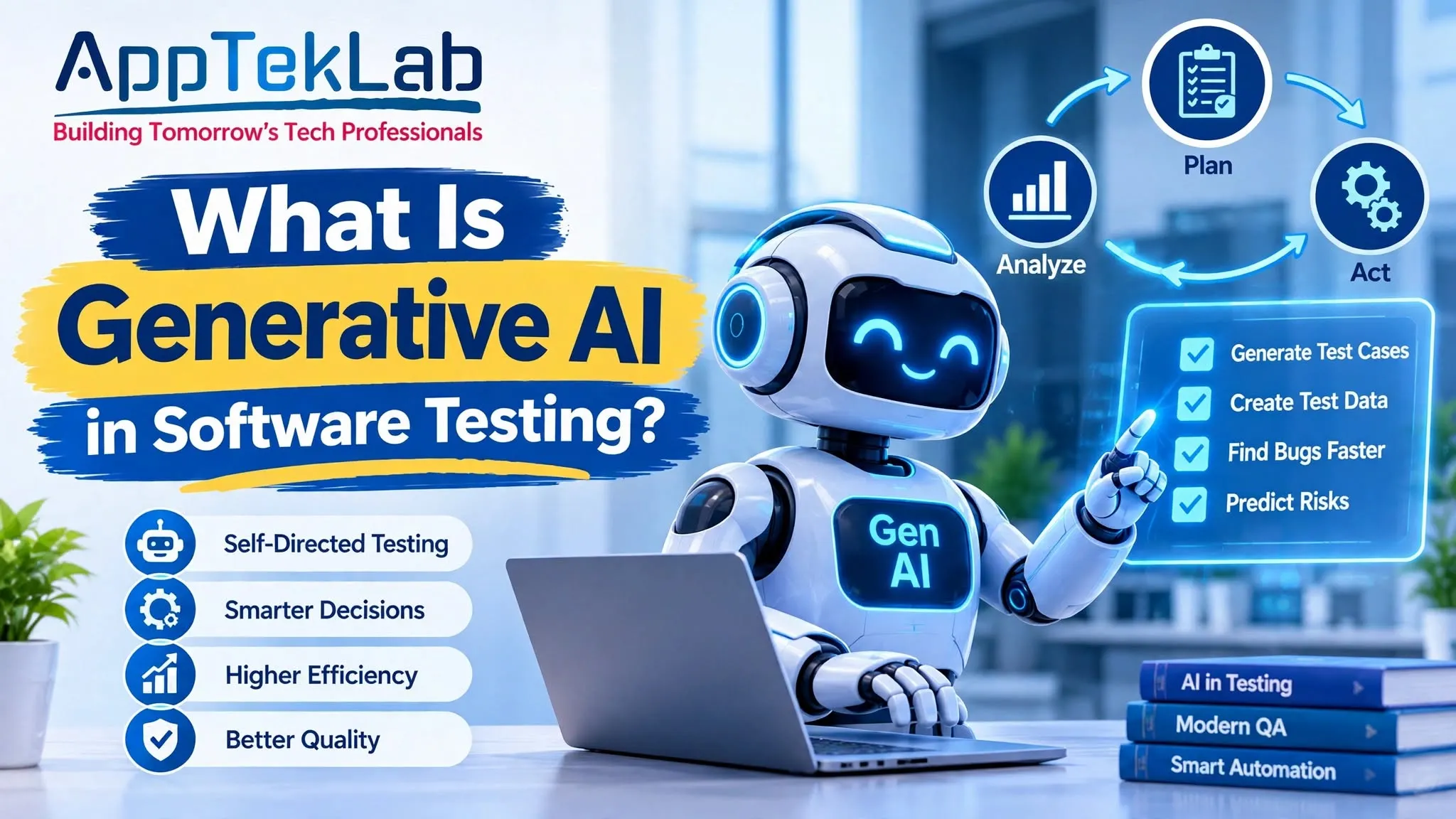
To bridge this gap, quality engineering teams are adopting Large Language Models (LLMs) and foundation models. Understanding what is generative AI in software testing reveals how machine intelligence creates test assets on demand.
Unlike traditional rule-based scripts, generative AI interprets system requirements, writes executable test code, and synthesizes edge-case data automatically. To master these modern capabilities hands-on, exploring practical implementations in AI-powered software automation testing gives QA engineers a major career advantage.
What Is Generative AI in Software Testing? 7 Core Capabilities
Generative AI in software testing refers to the application of foundation models—such as LLMs and multimodal models—to create new testing artifacts from natural language prompts, codebases, or system specifications.
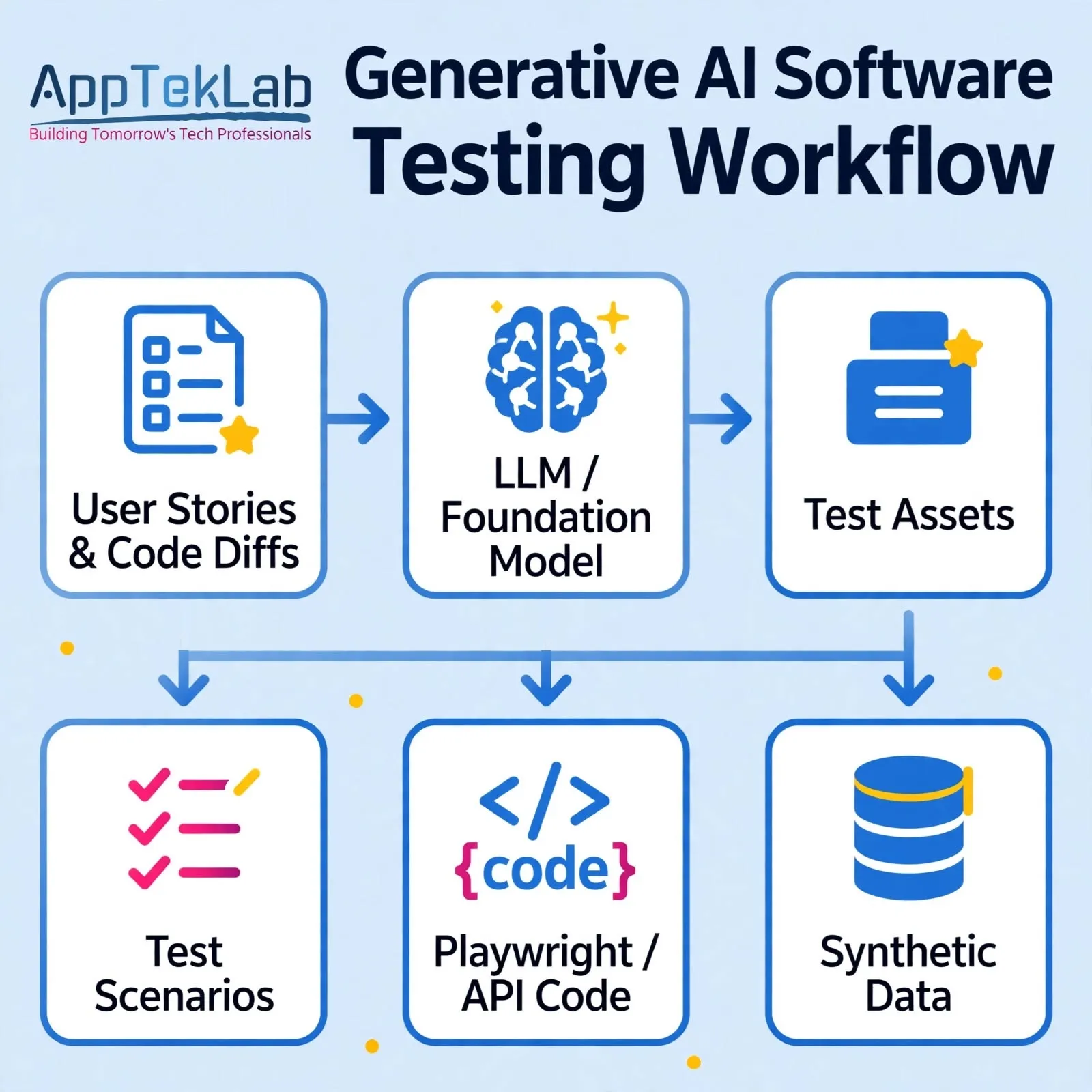
Instead of requiring engineers to manually author every line of test logic, generative models analyze product requirements and existing source code. They then output structured test scenarios, executable automation scripts, synthetic datasets, and detailed defect summaries.
Below, we break down the seven primary pillars defining how generative AI operates across modern quality assurance lifecycles:
1. Automated Test Case and Scenario Synthesis
Translating product requirements into thorough test plans is traditionally a time-consuming manual task. Generative AI accelerates this early shift-left phase by ingesting user stories, Jira tickets, and API specifications.
Within seconds, the model generates structured positive, negative, and boundary-value test cases. It identifies obscure edge cases—such as unexpected null payloads, special character injections, or concurrent session conflicts—that human engineers might overlook under tight deadlines.
2. Rapid Automation Script Generation
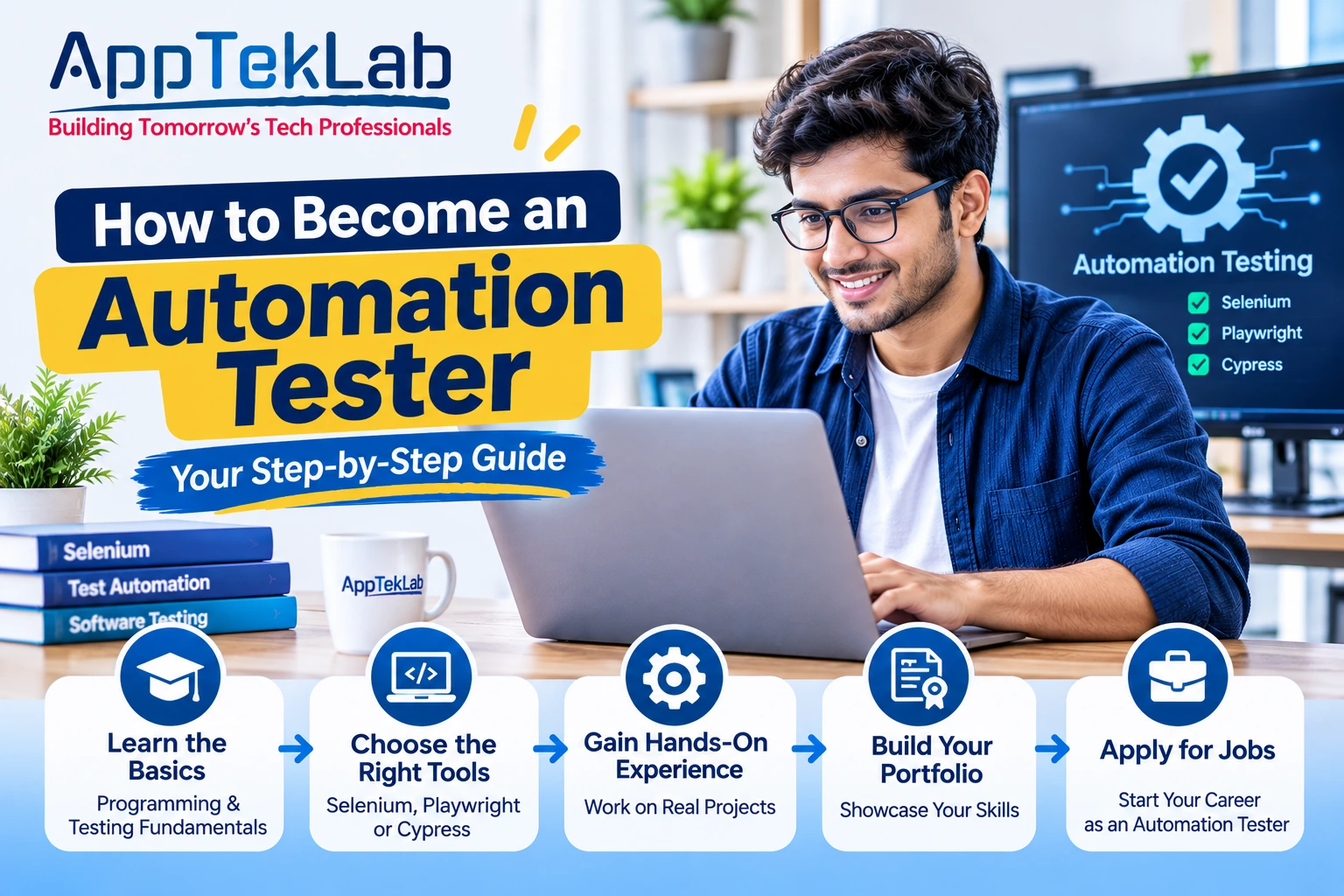
Writing boilerplate automation code across frameworks like Playwright, Cypress, or Selenium requires repetitive setup. Generative AI converts plain-English test steps directly into clean, modular test code.
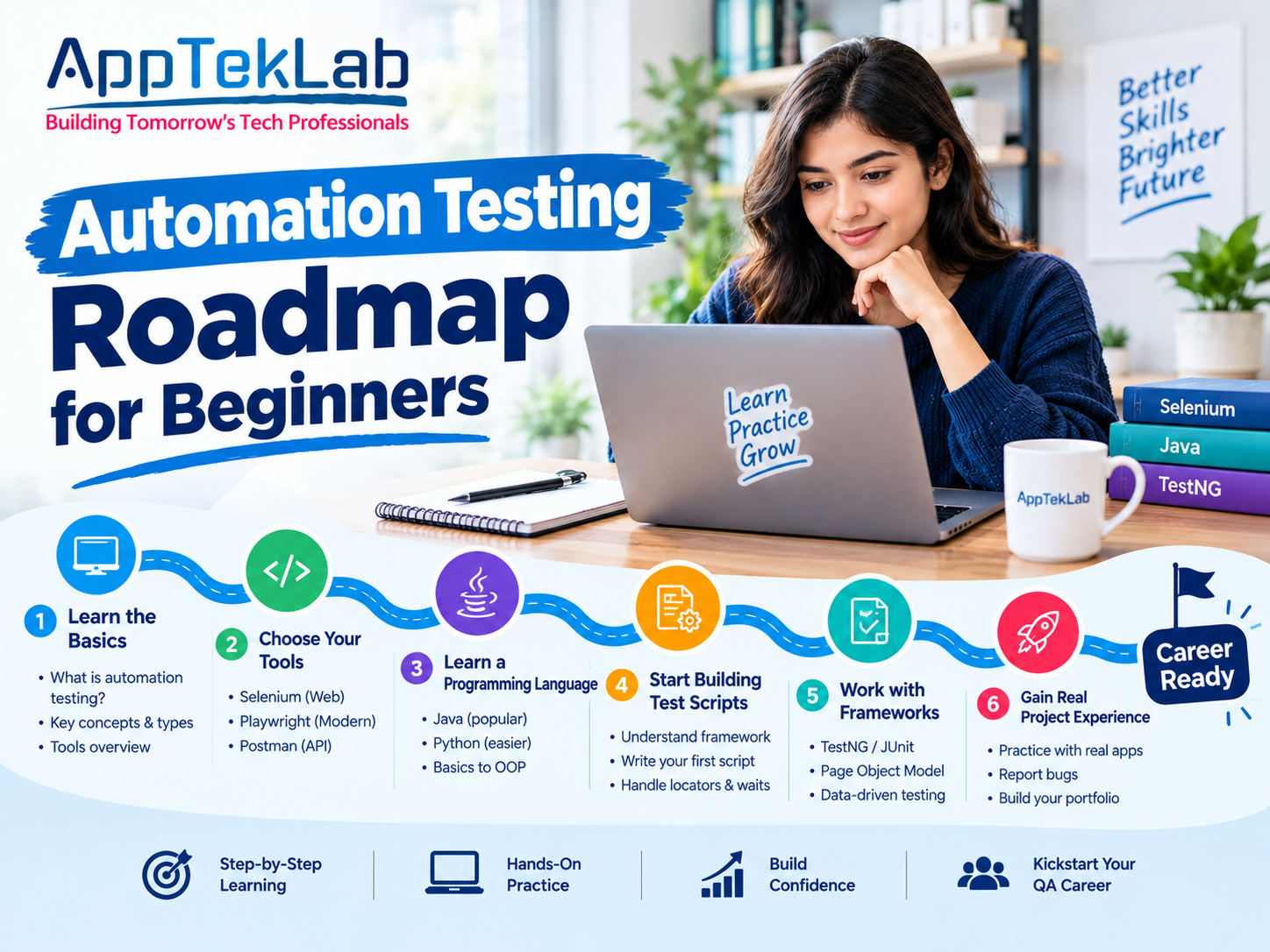
Engineers can prompt a model with a DOM snapshot or component code to generate Page Object Model (POM) classes, assertions, and network mocks. Building a strong foundation in core coding remains essential for reviewing this output, which is outlined in our automation testing roadmap for beginners.
3. Synthetic Test Data Generation
Testing enterprise applications in regulated industries like banking, healthcare, and insurance requires realistic data without exposing sensitive customer information.
Generative AI creates privacy-compliant synthetic datasets that mirror production schemas:
- Edge-Case Payloads: Generates malformed JSON structures, extreme numeric boundaries, and localized character formats.
- Relational Integrity: Produces multi-table SQL records that preserve foreign-key relationships across complex databases.
- Volume Scaling: Creates thousands of unique user profiles for load testing without compromising Personally Identifiable Information (PII).
4. Intelligent Code Review and Unit Test Coverage
Developers frequently merge feature code with incomplete unit test coverage due to sprint deadlines. Generative AI integrates directly into Integrated Development Environments (IDEs) and Git pull requests.
When a developer commits a code diff, the model analyzes logical branches and automatically generates missing unit tests in frameworks like PyTest, JUnit, or Jest. This ensures high code coverage before changes reach shared integration branches.
5. Automated Bug Triage and Root Cause Analysis
Debugging failed CI/CD pipelines often forces QA engineers to sift through thousands of lines of stack traces, container logs, and network errors.
Generative models ingest raw failure logs from observability platforms like Splunk or Grafana alongside recent commit histories. The AI summarizes the exact failure trigger in plain language, distinguishes genuine code regressions from environmental timeouts, and suggests targeted code patches.
6. Generative AI vs. Agentic AI in Software Testing
While closely related, generative AI and agentic AI serve distinct architectural roles in modern QA pipelines:
|
Evaluation Dimension |
Generative AI in Testing |
Agentic AI in Testing |
|
Primary Function |
Generates test cases, scripts, and synthetic data from prompts. |
Executes multi-step goals autonomously across live environments. |
|
Interaction Model |
Prompt-and-response (requires human execution). |
Goal-driven closed loop (plans, acts, and self-heals). |
|
Environment Access |
Operates on text, code snippets, and static files. |
Interacts directly with live browsers, APIs, and databases. |
|
Maintenance Role |
Drafts updated code snippets when prompted. |
Automatically repairs broken locators during runtime. |
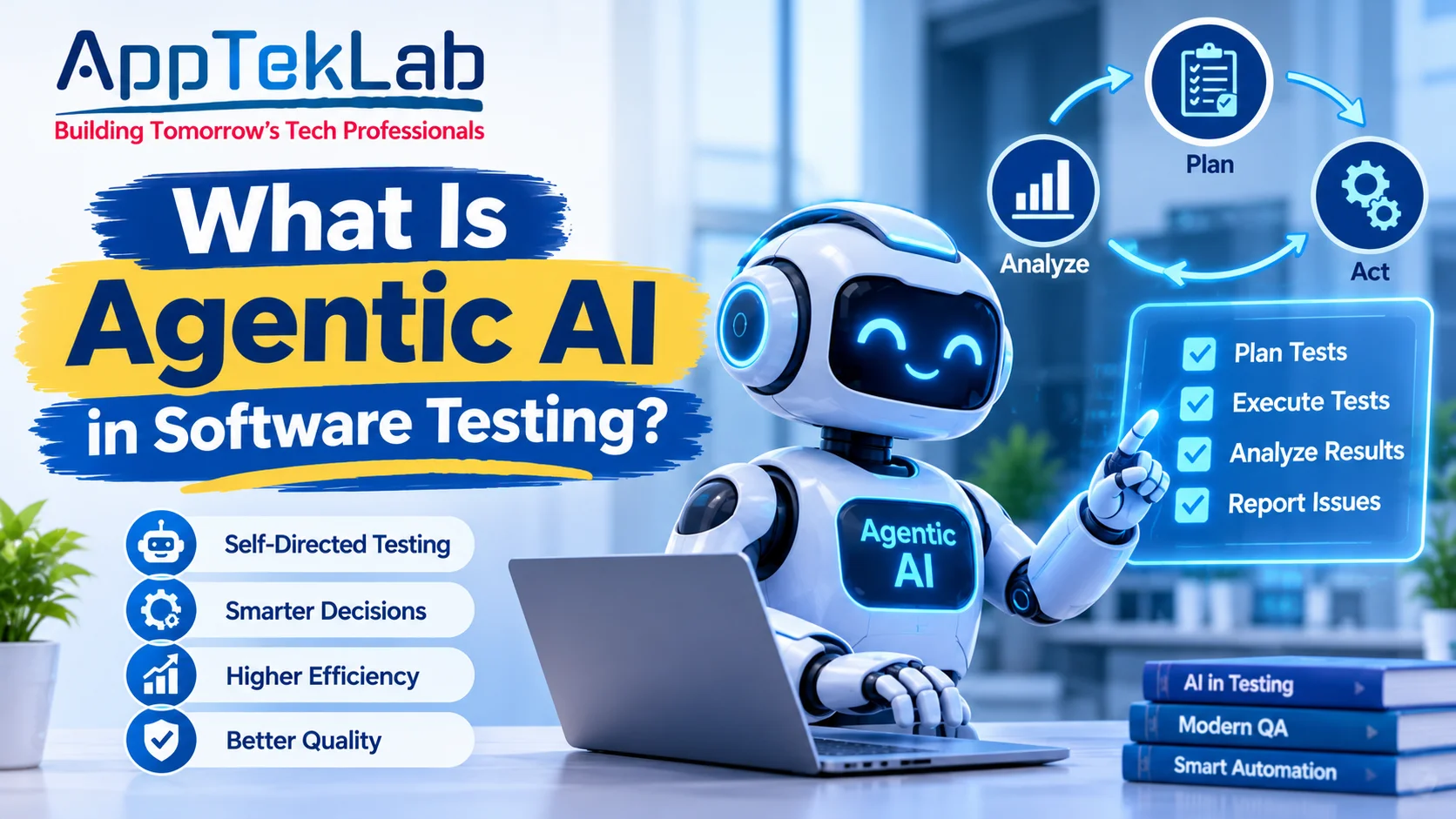
To explore how autonomous agents build upon generative foundations to execute end-to-end tests independently, read our deep dive on what is agentic AI in software testing.
7. Bridging Manual Intuition and Automated Scale
Generative AI does not replace human quality engineers; rather, it acts as a force multiplier. By offloading repetitive script authoring and data preparation to foundation models, QA specialists gain time for high-value exploratory audits and usability reviews.
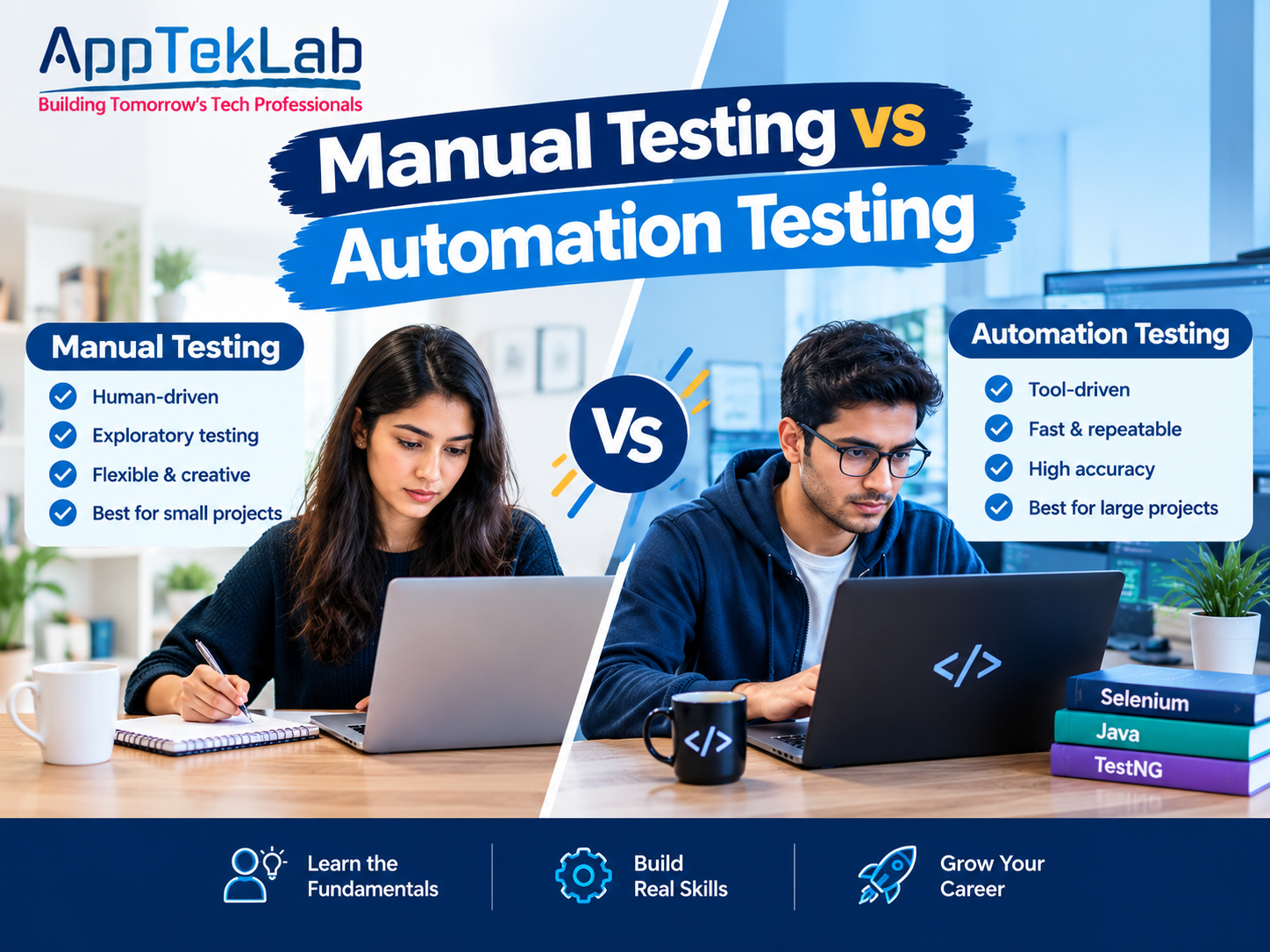
Understanding how algorithmic speed complements human visual deduction is vital for every modern test team, a balance explored in our comparison of Manual Testing vs Automation Testing.
Aspiring engineers can build core test design instincts through a dedicated manual software testing course before integrating generative tools into their daily workflows.
4 Best Practices for Implementing Generative AI in QA
Adopting generative AI safely requires structured engineering governance:
- Enforce Human-in-the-Loop Reviews: Never merge AI-generated test scripts directly into production branches without code review. Engineers must verify assertions to prevent "hallucinated" tests that pass without validating real business logic.
- Protect Proprietary Code and Data: Use enterprise-grade private LLM deployments or zero-data-retention APIs so internal source code and database schemas are never used to train public models.
- Provide Rich Context: Feed models your existing framework architecture, coding standards, and Page Object patterns so generated scripts match your repository style.
- Combine with Performance Validation: While generative AI creates functional scenarios rapidly, teams must still validate backend stability under heavy traffic. Review our guide on what is performance testing to ensure generated suites pair with proper load testing.
Frequently Asked Questions (FAQ)
What is generative AI in software testing?
Generative AI in software testing uses Large Language Models (LLMs) to automatically create test cases, executable automation scripts, synthetic test data, and root-cause bug summaries from product requirements and source code.
Can generative AI write Playwright or Selenium test scripts?
Yes. Generative AI models can convert plain-English user stories or HTML DOM structures into structured Playwright, Cypress, or Selenium test scripts using design patterns like the Page Object Model.
Will generative AI replace manual software testers?
No. Generative AI accelerates test creation and data synthesis, but it cannot evaluate human user experience, visual aesthetics, or real-world product intuition. Human QA engineers remain essential for reviewing AI output and conducting exploratory testing.
What are the main risks of using generative AI in QA?
The primary risks include AI hallucinations (generating assertions that validate incorrect behavior), flaky element selectors if given poor DOM context, and potential data privacy leaks if sensitive data is pasted into public AI interfaces.
Accelerate Your Quality Engineering Career
Understanding what is generative AI in software testing is essential for thriving in modern agile engineering teams. By combining solid testing fundamentals with prompt-driven script generation and synthetic data modeling, QA professionals can dramatically accelerate release cycles without compromising quality.
To master modern test frameworks, foundational QA methodologies, and AI-augmented engineering workflows, explore structured software testing courses or browse all courses at AppTekLab to advance your career today.