How Do I Become a Software Tester? A Complete Roadmap for Beginners
Entering the tech industry can feel overwhelming, especially when you do not have a background in computer science or programming. However, quality assurance is one of the most accessible and rewarding entry points into tech. If you find yourself asking, how do i become a software tester, the answer comes down to following a structured, step-by-step path that builds both theoretical knowledge and practical execution skills.
As software applications become more complex, the demand for dedicated quality professionals continues to surge. Companies across all industries require skilled professionals to verify code behavior, catch bugs, and ensure seamless user experiences before products ever hit the market. Building a career in this field does not require an expensive computer science degree. Instead, consistency, hands-on tool practice, and practical learning are your best allies.
Essential Steps on How Do I Become a Software Tester
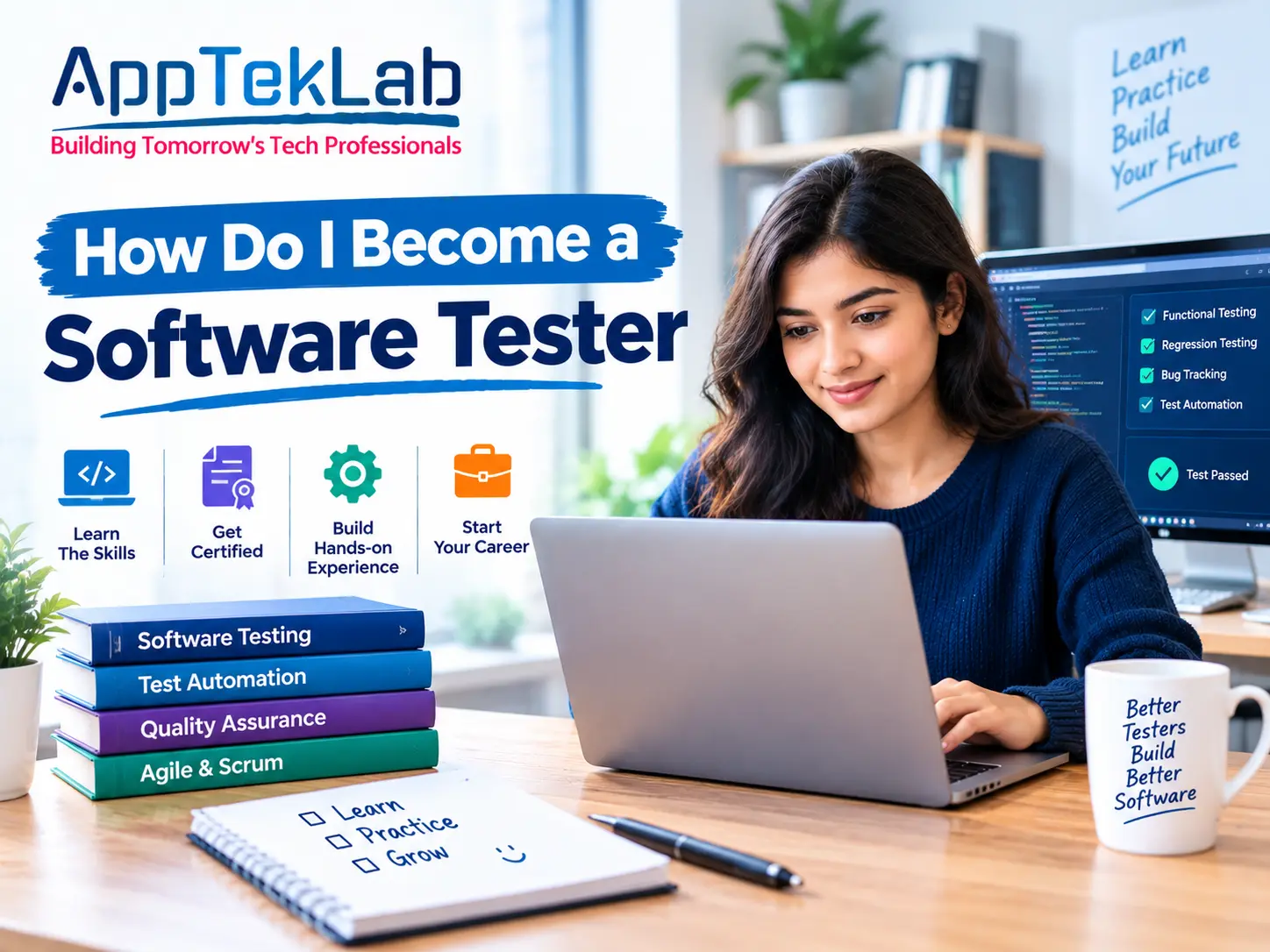
Following a well-defined progression is the most reliable way to master quality assurance from scratch. Here are the core phases you need to complete to become a professional tester:
1. Understand the Software Testing Fundamentals
Before touching any advanced automation tools or writing complex code, you must build a strong foundation in quality assurance principles. This forms the backbone of every successful testing career and shapes how you approach application analysis.
- Software Development Life Cycle (SDLC): Understand how software goes from an initial concept to production deployment.
- Software Testing Life Cycle (STLC): Learn the specific phases of test planning, test case design, execution, and defect reporting.
- Test Case Design Techniques: Learn how to write clear test steps, pre-conditions, and expected results.
- Defect Lifecycle: Track how a bug moves from initial discovery to debugging, fixing, and retesting. If you are just starting out from scratch, enrolling in a dedicated foundational program like QA Software Testing - 101 can help you grasp these principles quickly and effectively. Grasping these core concepts ensures you understand why tests are executed, rather than just clicking buttons blindly.
2. Get Hands-On With Industry-Standard QA Tools
Once you master the basic theory, you need practical tool experience. Recruiters look for candidates who know how to use standard software daily to manage workflows and investigate application behavior.
- Jira or Bugzilla: Essential bug-tracking platforms used to log defects, manage test sprints, and track project workflows.
- SQL and Databases: Learn how to write basic queries, joins, and filters to verify backend data integrity. You can build these data management skills through specialized SQL training modules.
- Postman: A popular tool used for testing APIs and validating backend server responses without relying entirely on the user interface. Practicing with these tools daily bridges the gap between classroom theory and real-world corporate expectations. Knowing how to query a database to check if user data saved correctly is a superpower for junior testers.
3. Start With Manual Testing Before Moving to Automation
Almost every successful automation engineer starts their journey in manual testing. Manual testing sharpens your analytical eye, teaches you how to think like an end-user, and trains you to break software intentionally. Once you feel comfortable executing manual test scripts, you can transition into technical automation:
- Pick a beginner-friendly programming language like Java or Python.
- Learn web automation frameworks like Selenium WebDriver or Playwright.
- Explore test runners like JUnit, TestNG, or PyTest to organize your test scripts. For those looking to stay ahead of modern industry shifts, exploring advanced paths like AI-Powered Software Automation Testing can give you a massive competitive advantage in the job market. Automation saves teams hundreds of hours during regression testing cycles.
4. Build a Real Portfolio and Earn Certifications
A certificate or a degree helps you pass initial HR filters, but a practical portfolio proves your actual capability to engineering managers.
- Earn Certifications: Consider the globally recognized ISTQB Certified Tester Foundation Level (CTFL) exam to validate your core knowledge.
- Build a Portfolio: Test real public applications, write structured test cases, log clean bug reports, and publish a small automation script repository on GitHub.
- Network in the Industry: Connect with other quality assurance professionals and join tech communities to learn about unadvertised job openings. Having concrete proof of your work makes you stand out instantly in a crowded hiring pool.
Exploring Career Tracks and Advanced Specializations in Tech
Once you grasp the foundational principles of quality assurance, expanding your horizons can open up broader career trajectories. Modern technology ecosystems require versatile specialists who understand more than just basic execution. Whether you want to dive deeper into specialized testing domains or transition into structural system analysis, cross-training significantly accelerates professional growth.
Professionals often look into complementary disciplines such as database management, performance optimization, and business logic mapping. Gaining proficiency in query analysis or exploring specialized fields like Oracle PL/SQL Developer with GenAI ensures you remain adaptable to shifting industry standards. Combining your testing foundation with analytical training positions you for higher-level roles across diverse corporate tech environments. Continuous learning is the ultimate secret to long-term salary growth and career stability in tech.
Frequently Asked Questions (FAQs)
Can I become a software tester without a coding background?
Yes, absolutely. You can start your career in manual testing, which focuses on user experience, exploratory testing, and test case execution without requiring heavy coding skills. You can learn programming later as you transition into automation roles.
How long does it take to learn software testing?
Most dedicated beginners can learn the fundamentals of manual testing and basic automation within three to six months of consistent daily study and hands-on practice.
Do I need a computer science degree to get hired?
No. The tech industry values practical skills, a strong portfolio, and problem-solving abilities far more than traditional degrees. Many successful testers come from diverse professional backgrounds.
What is the difference between manual and automation testing?
Manual testing involves humans executing test cases step-by-step without scripts. Automation testing uses specialized software and code scripts to run repetitive tests automatically, saving time on large-scale projects.
What is the average starting salary for a software tester?
Starting salaries vary based on geographic location, company size, and skill level (manual versus automation), but entry-level quality professionals generally enjoy competitive compensation with strong upward mobility.