
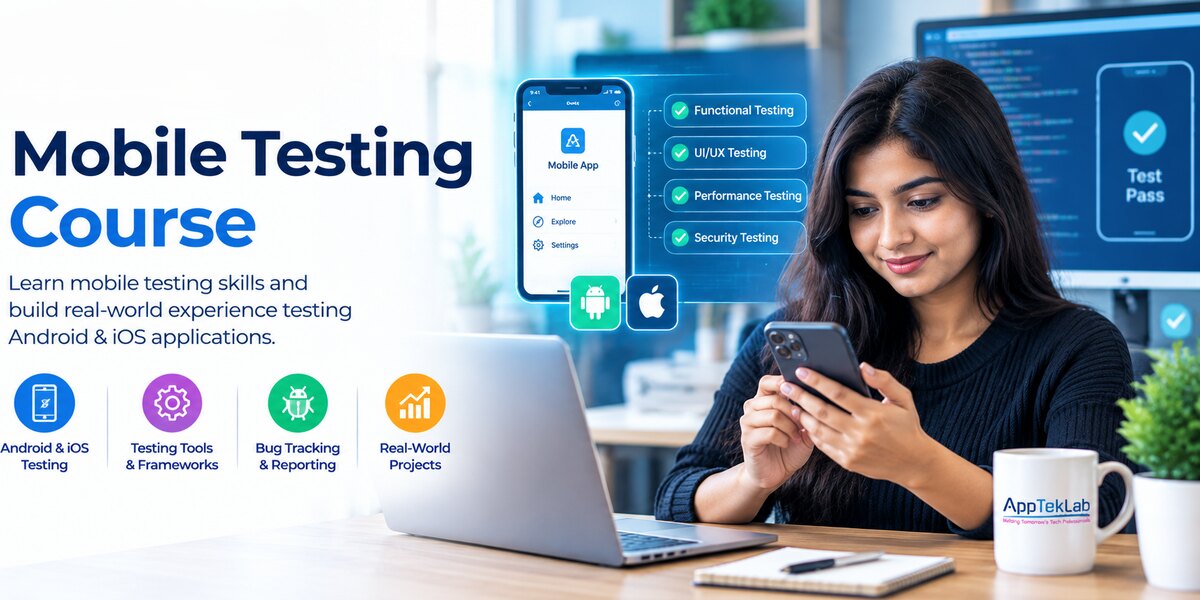
Mobile Testing Course
Mobile devices now drive the majority of global digital traffic, making application quality more critical than ever. Users expect fast load times, flawless layouts, and seamless touch responsiveness across hundreds of different smartphone models. Enrolling in a comprehensive mobile testing course helps you bridge the gap between desktop quality assurance and complex mobile environments.
Whether you have already completed a manual software testing course or want to expand your technical skill set, this program guides you step by step. You will learn how to test iOS and Android applications, handle device fragmentation, and simulate real-world user interruptions. You will also explore automated scripts using frameworks like Appium. To further enhance your professional profile, you can look into specialized tracks such as Advance SQL for backend data validation. Master mobile quality assurance today and unlock new career opportunities.
Not sure? Get Free Consultation Today!
Course Includes
- Importance of mobile testing
- Key challenges in mobile testing
- Mobile Testing Types:
- Functional testing
- Non-functional testing
- Performance testing
- Security testing
- Mobile Testing Vs. Web Testing
- Key differences and similarities
- Unique challenges in mobile testing
- Mobile Platforms
- Android
- iOS
- Cross-platform considerations
- Mobile Devices
- Different devices and screen sizes
- Emulators vs. physical devices
- Mobile Browsers
- Testing on mobile browsers
- Responsive design testing
- Native Apps
- Characteristics and testing considerations
- Tools for native app testing
- Web Apps
- Testing mobile web applications
- Responsive design testing
- Hybrid Apps
- Combining native and web elements
- Testing strategies for hybrid apps
- Emulators and Simulators
- Overview and usage
- Advantages and limitations
- Mobile Testing Frameworks
- Appium
- Selenium for mobile testing
- XCTest and Espresso
- Cloud-Based Testing
- Introduction to cloud testing services
- Benefits and use cases
- Installation and Uninstallation Testing
- App installation and removal
- Handling app updates
- Usability Testing
- User interface testing
- User experience considerations
- Functional Testing Techniques
- Input validation
- UI interactions
- Navigation testing
- Performance Testing
- Load testing
- Stress testing
- Responsiveness testing
- Security Testing
- Data security
- Network security
- Authorization and authentication
- Introduction to Mobile Automation
- Benefits of automation
- Choosing test cases for automation
- Appium for Mobile Automation
- Setting up Appium
- Writing and executing test scripts
- Mobile Test Automation Best Practices
- Test script design
- Cross-browser testing
- Test Case Design for Mobile
- Test case writing techniques
- Positive and negative testing
- Test Execution and Reporting
- Running test suites
- Analyzing test results
- CI/CD Overview
- Introduction to Continuous Integration and Continuous Deployment
- Benefits of CI/CD in mobile testing
- Setting up Mobile CI/CD Pipeline
- Integrating mobile testing into CI/CD
- Automated deployment to app stores
- Best Practices in Mobile Testing
- Test data management
- Cross-device testing
- Challenges in Mobile Testing
- Fragmentation challenges
- Keeping up with device and OS updates
- Real-world Mobile Testing Scenarios
- Case studies from successful mobile testing projects
- Lessons learned and best practices
- Hands-On Labs
- Practical exercises using mobile testing tools and frameworks
- Recap of Key Concepts
- Review of major topics covered in the course
- Emerging Trends in Mobile Testing
- The future of mobile testing
- Latest tools and technologies
No Data found
Related Courses



Frequently Asked Questions
A mobile testing course teaches you how to evaluate mobile applications across iOS and Android platforms to ensure optimal performance, usability, and stability. The curriculum covers functional testing, UI/UX verification, network condition simulation, and device fragmentation handling. Students also gain hands-on experience using industry-standard tools like Appium and mobile emulators. To complement your mobile quality assurance profile, learners often explore foundational modules like a manual software testing course or backend verification through an introductory SQL session.
While having basic programming familiarity can help when transitioning into mobile automation, you do not need to be an expert developer to get started. Many training pathways begin with manual mobile evaluation concepts, such as checking touch gestures, screen rotations, and interrupt handling (calls, battery loss). Once core mobile concepts are clear, you can progress to automated frameworks. Starting with skills from an automation testing course online makes learning mobile automation tools significantly smoother and more manageable.
The duration of a mobile testing training program typically ranges from 6 to 10 weeks, depending on your preferred study pace. The curriculum balances concise theoretical sessions with practical lab exercises executed on real devices and virtual simulators. After finishing the core modules, students spend time building testing portfolios and preparing for technical interviews. Because businesses heavily rely on mobile applications for customer engagement, skilled mobile QA professionals enjoy steady career demand.
Completing a specialized mobile testing program opens up exciting career opportunities across the digital product and tech sectors. Graduates frequently qualify for roles such as Mobile QA Engineer, App Testing Specialist, and Quality Assurance Analyst. As you gain hands-on experience managing device farms and debugging mobile crash logs, you can advance into senior engineering positions. Furthermore, many professionals expand their technical capabilities by exploring advanced tracks like Performance Testing to evaluate app load times under heavy traffic.
Choosing this specialized training means investing in a curriculum designed around modern mobile ecosystems and real-world corporate challenges. Instead of focusing solely on abstract theory, the program emphasizes practical execution, bug tracking, and automated script creation for smartphones and tablets. You work with the exact testing workflows used by top mobile engineering teams daily. With dedicated mentor support and a clear path connecting to advanced tracks like AI-Powered Software Automation Testing, you receive a reliable roadmap to future-proof your tech career.
