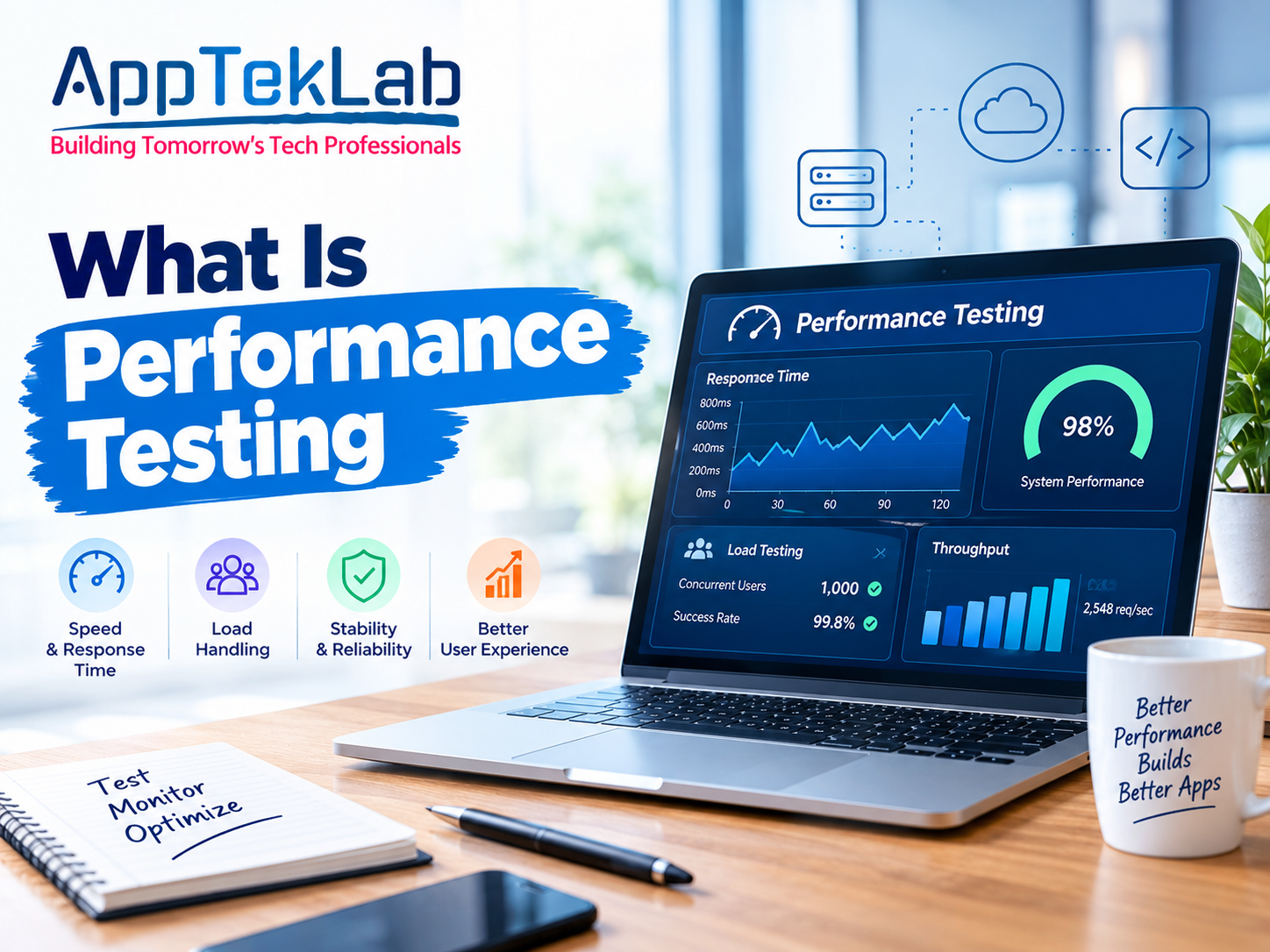
What Is Performance Testing? A Comprehensive Guide for Beginners
In the modern digital landscape, user experience can make or break a business. When a website or mobile application takes too long to load, users leave immediately. Ensuring that software operates at peak speed and stability requires rigorous quality assurance. If you want to build a reliable tech career, understanding what is performance testing is essential. Platforms like AppTekLab offer specialized learning paths to help you master these critical skills.
This comprehensive guide explores what is performance testing, why it matters, and how it protects applications from failure under heavy loads.
What Is Performance Testing and Why Does It Matter?
Performance testing is a specialized type of software evaluation that determines how a system performs under a specific workload. Unlike functional testing, which checks if a feature works correctly, this evaluation measures speed, responsiveness, and stability under pressure.
The primary goal is not to find basic syntax bugs or logic errors. Instead, it uncovers system bottlenecks, latency issues, and resource constraints in the infrastructure. Engineers simulate real-world user traffic to see how the system behaves under normal and peak conditions.
Every digital product faces sudden traffic spikes, seasonal sales, or viral marketing moments. Without proper verification, servers can crash unexpectedly, resulting in massive downtime. If you are looking to break into the tech industry, gaining practical knowledge through a structured software testing boot camp can give you a competitive edge.
Core Benefits of System Evaluation
Understanding what is performance testing allows organizations to protect their digital assets and maintain high customer satisfaction. Without these checks, companies risk losing revenue and damaging their brand reputation.
Key Benefits Include:
-
Identifies Speed Bottlenecks: Pinpoints slow database queries, inefficient code, or network latency before users experience them.
-
Ensures Scalability: Confirms whether an application can handle thousands or millions of concurrent users simultaneously.
-
Prevents Revenue Loss: Protects e-commerce platforms and enterprise tools from downtime during critical business hours.
-
Enhances User Retention: Keeps response times minimal, ensuring a smooth and frustrating-free user experience.
To gain hands-on expertise in analyzing application speed and behavior, consider enrolling in a dedicated performance testing course.
Core Types and Categories
Performance testing is an umbrella term that includes several specialized variations. Each type serves a unique purpose during the software development lifecycle.
1. Load Testing
Load testing checks the application's ability to handle expected user loads. The goal is to observe behavior under normal conditions and peak operational demand.
2. Stress Testing
Stress testing pushes the system far beyond normal operational limits. It helps determine the breaking point of an application and evaluates how well the system recovers from a crash.
3. Endurance Testing (Soak Testing)
Endurance testing verifies whether the software can sustain a continuous, significant load over an extended period. It helps detect memory leaks and gradual performance degradation.
4. Spike Testing
Spike testing observes system reactions to sudden, massive increases in user traffic. This is common during flash sales or breaking news events.
5. Volume Testing (Flood Testing)
Volume testing introduces a massive amount of data into the database to monitor how data volume impacts overall system speed and response time.
To explore other modern quality assurance methodologies, you can check out comprehensive programs like automation testing to streamline your workflow.
The Standard Execution Process
Executing an effective evaluation requires a structured, step-by-step approach. Skipping phases can lead to inaccurate results and unaddressed production bottlenecks.
-
Step 1: Identify the Test Environment: Understand the hardware, software, and network configurations available for testing.
-
Step 2: Determine Performance Criteria: Define success metrics, such as response times, throughput targets, and acceptable resource utilization limits.
-
Step 3: Plan and Design Tests: Map out typical user scenarios, user journeys, and traffic patterns using specialized testing tools.
-
Step 4: Configure the Test Environment: Prepare the testing tools, servers, and monitoring systems to mirror production environments.
-
Step 5: Run the Tests: Execute the scripts while monitoring system metrics like CPU usage, memory leaks, and response times.
-
Step 6: Analyze and Tune: Review the generated reports, identify root causes of slowdowns, optimize the code or infrastructure, and retest.
Popular Tools Used in the Industry
Choosing the right tool depends on your technology stack, budget, and project requirements. Several industry-standard tools help engineers automate and execute these checks efficiently:
-
Apache JMeter: An open-source Java application designed to load test functional behavior and measure performance.
-
LoadRunner: A robust enterprise-grade tool by Micro Focus suitable for complex applications and massive user loads.
-
Gatling: A developer-friendly load-testing framework built on Scala, known for high performance and expressive syntax.
-
K6: A modern, developer-centric open-source load testing tool written in Go, using JavaScript for scripting.
If you want to build proficiency in modern QA tools and advance your career, exploring resources at AppTekLab can help you get started.
Conclusion
Understanding what is performance testing is a vital pillar for anyone entering software development and quality assurance. By simulating real-world user traffic, development teams can prevent costly crashes, optimize speed, and deliver exceptional digital experiences. Whether you are an aspiring developer or a seasoned QA professional, mastering these concepts will significantly enhance your value in the tech job market.
Ready to take the next step in your professional journey? Visit AppTekLab today to explore expert-led courses and boot camps designed to bridge skill gaps and accelerate your career!