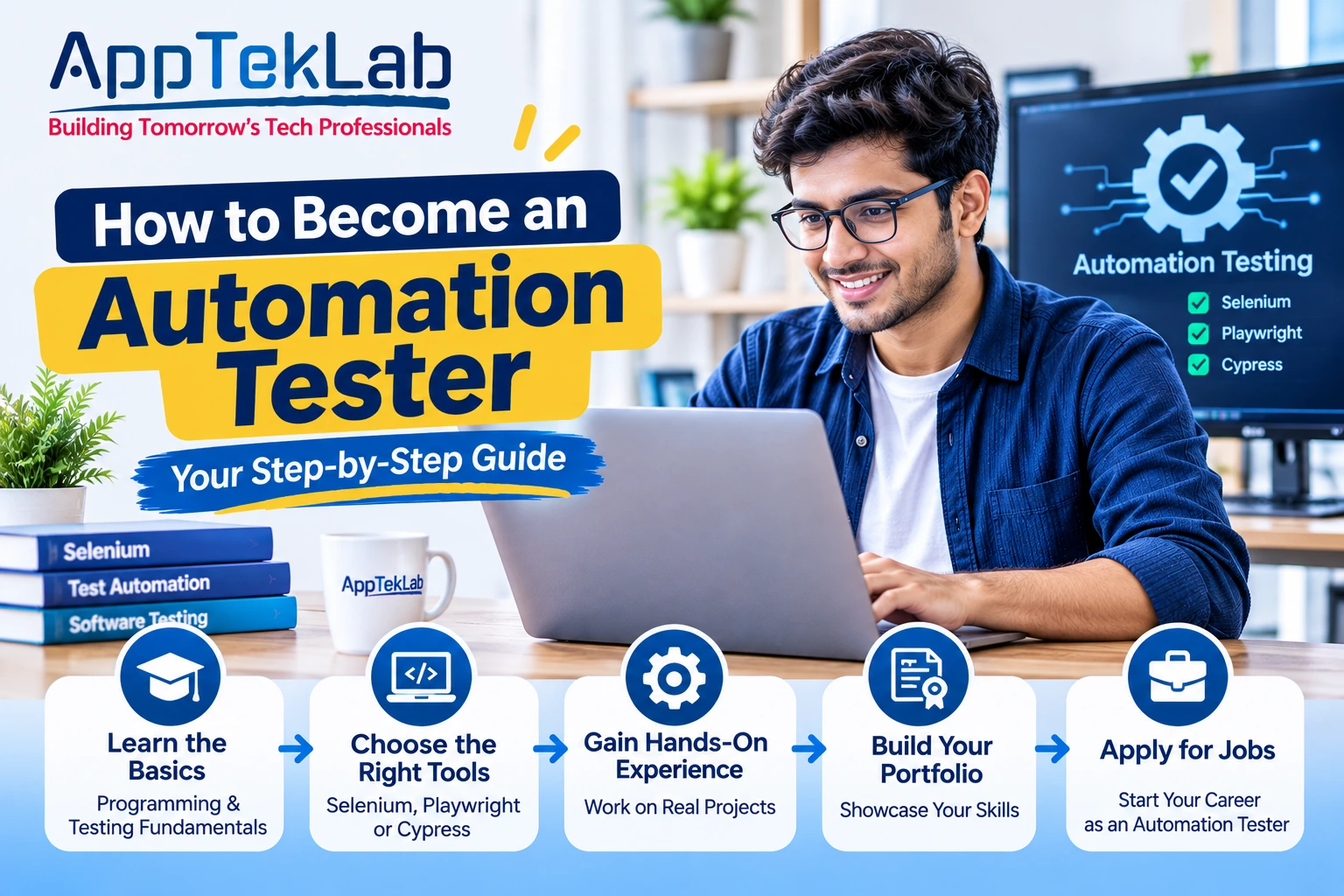
How to Become an Automation Tester: Complete Step-by-Step Career Roadmap
Software development teams push production code faster than ever before. To keep up with modern sprint cycles, engineering organizations have made automated quality verification a mandatory core competency. Consequently, learning how to become an automation tester has emerged as one of the most stable, high-paying career paths in software engineering.
However, transitioning into this field requires more than just memorizing a few testing tools. You need a structured understanding of software architecture, programming fundamentals, automated test frameworks, and continuous delivery pipelines.
This comprehensive guide outlines the exact learning path, core technical skills, and career milestones required to break into test automation. If you are starting your journey, enrolling in structured software testing courses provides the guided mentorship and hands-on laboratory practice needed to become job-ready.
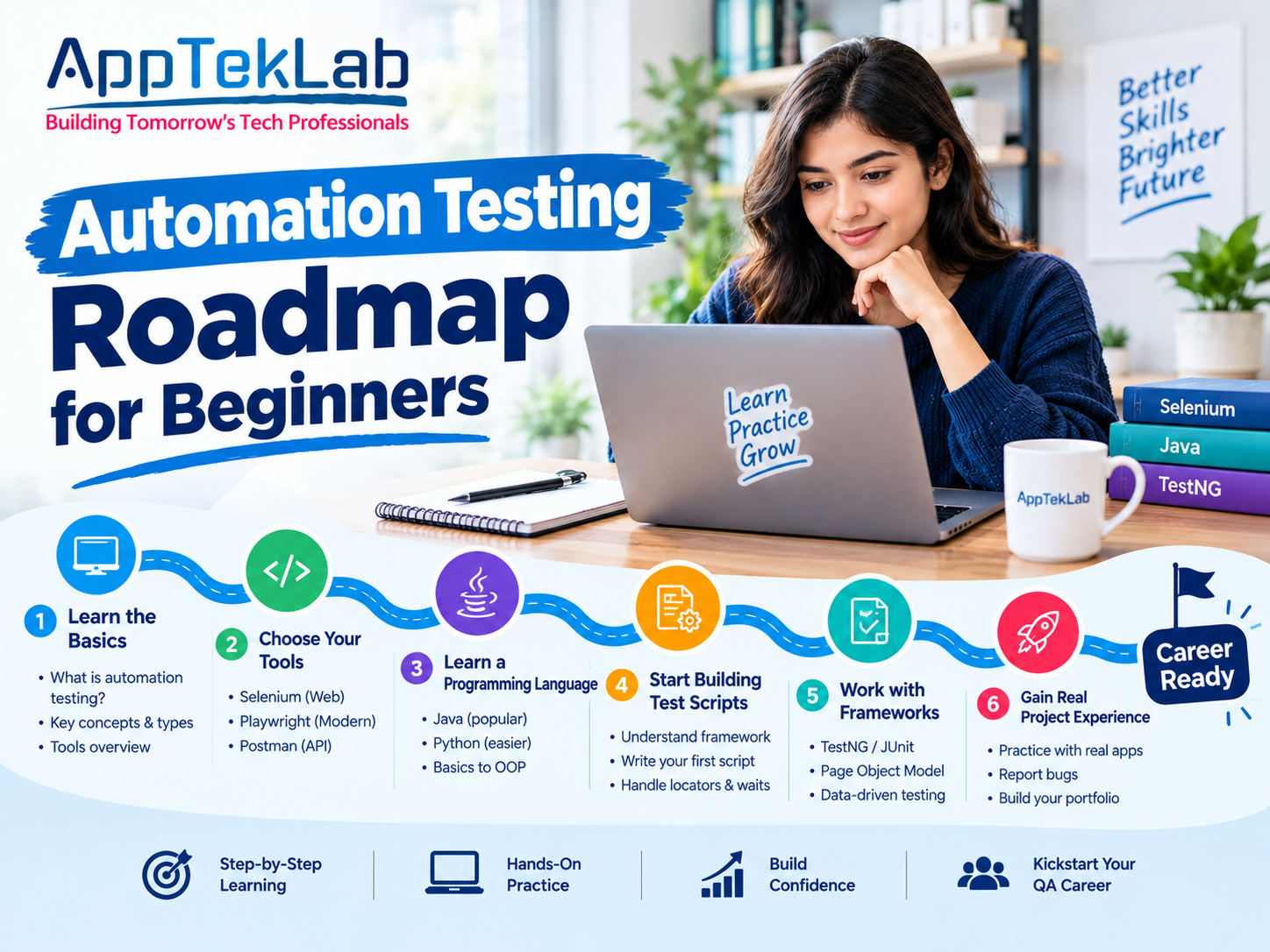
How to Become an Automation Tester: The 7-Step Roadmap
Breaking into test automation without a plan often leads to tutorial paralysis. The secret to long-term success is building your skills layer by layer—from foundational testing logic up to continuous integration and autonomous test tooling.
Below, we break down the definitive seven-step career roadmap to help you transition from a beginner or manual QA tester into a fully proficient Test Automation Engineer:
+-----------------------------------------------------------------------------------+
| Automation Tester Career Roadmap |
| |
| [1. QA Fundamentals] -> [2. Core Programming] -> [3. Web UI Automation] |
| | |
| v |
| [6. CI/CD & Cloud] <- [5. API Testing] <- [4. Framework Design (POM)] |
| | |
| +--------------> [7. AI-Augmented Quality Engineering] |
+-----------------------------------------------------------------------------------+
1. Build a Strong Foundation in Manual Testing and STLC
You cannot automate quality checks effectively if you do not understand what makes a test scenario valuable. Automated scripts only execute the explicit assertions you program into them; automated tests based on flawed logic simply produce fast, flawed feedback.
Begin by mastering the Software Testing Life Cycle (STLC) and Software Development Life Cycle (SDLC). Learn how to analyze product specifications, apply boundary value analysis, create equivalence classes, and write detailed bug reports.
Understanding core quality assurance principles ensures you know precisely which workflows yield high business value when automated. If you are starting without technical background, completing a dedicated manual software testing course establishes the foundational domain knowledge required for advanced testing work.
2. Master One Core Programming Language
Automation testers write maintainable, modular software code. Attempting to learn multiple languages simultaneously is a common pitfall. Instead, select one primary programming language and master its core concepts:
- Python: Highly readable, beginner-friendly, and widely adopted for functional testing, API suites, and data science workflows.
- JavaScript / TypeScript: The premier language for modern web front ends, powering lightning-fast frameworks like Playwright and Cypress.
- Java: The established enterprise heavyweight, deeply embedded across enterprise environments and legacy Selenium grids.
Focus heavily on Object-Oriented Programming (OOP) concepts, including classes, encapsulation, inheritance, and polymorphism. Learn how to handle runtime exceptions, manipulate data structures, and parse files such as JSON, XML, and CSV.
3. Learn Web UI Automation and Browser Locators
Once you understand programming basics, the next step is automating web browsers. Web UI automation involves writing scripts that launch browsers, find interface elements, simulate user actions, and verify on-screen responses.
To become proficient, master these core concepts:
- Element Locators: Learn to write resilient CSS selectors and dynamic XPath expressions that do not break whenever UI styles change.
- UI Interactions: Automate clicks, text inputs, hover states, multi-select dropdowns, modal alerts, and iframes.
- Synchronization & Explicit Waits: Avoid flaky tests caused by hardcoded sleeps by leveraging dynamic waits that monitor network states and DOM availability.
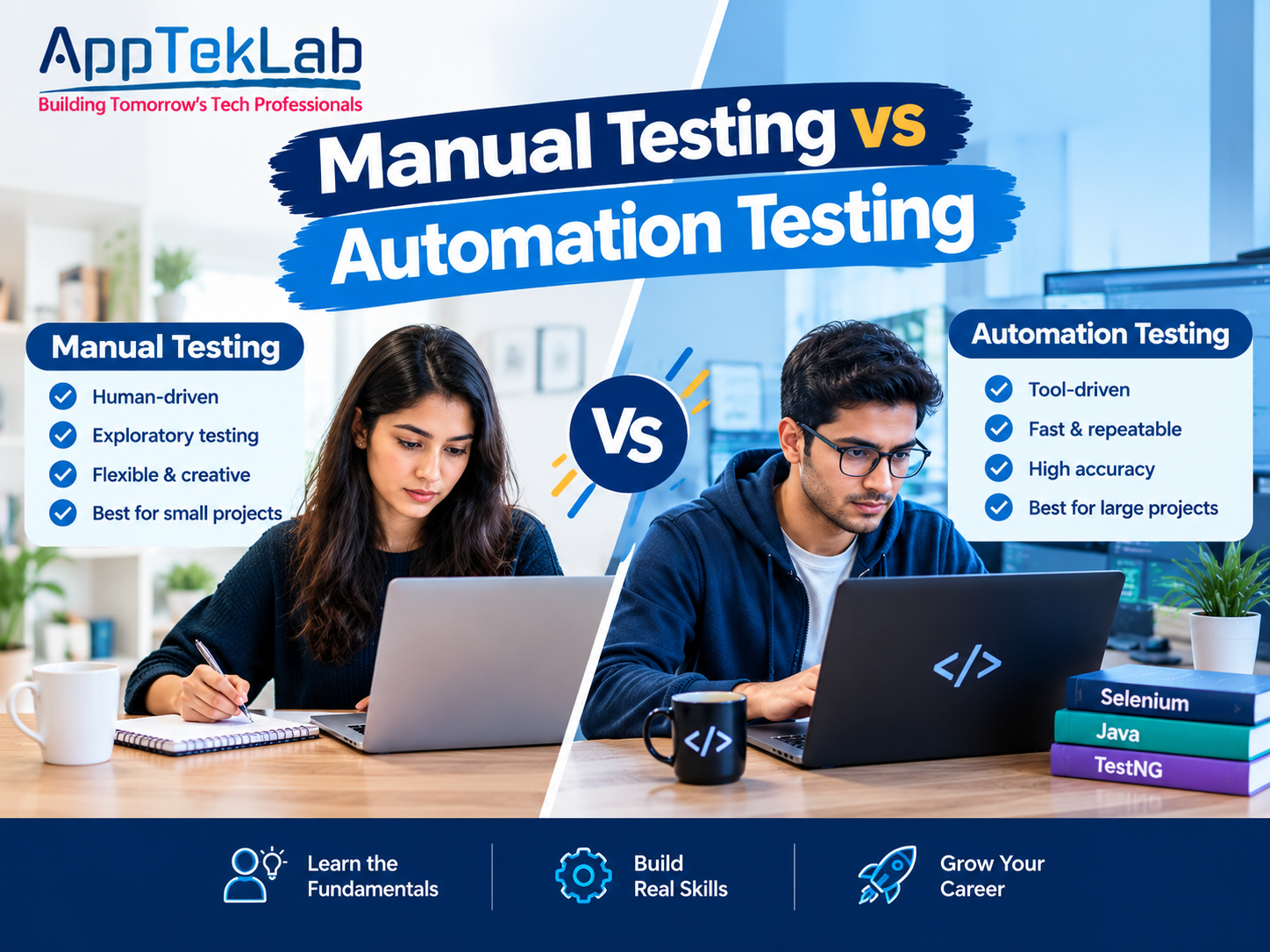
Reviewing the practical trade-offs between scripted execution and human inspection in our guide to Manual Testing vs Automation Testing will help you understand where UI automation delivers the highest return on investment.
4. Architect Scalable Test Frameworks (Page Object Model)
Writing isolated scripts is sufficient for learning exercises, but enterprise engineering teams require modular, scalable frameworks. If a developer alters a button identifier, you should only have to update code in one centralized place, not across fifty individual test scripts.
Key framework design principles include:
- Page Object Model (POM): A software design pattern that separates test assertion logic from the underlying web page locators and user actions.
- Test Runners: Use industry-standard test runners like PyTest (Python), JUnit/TestNG (Java), or Mocha/Jest (JavaScript) for test grouping, setup/teardown fixtures, and assertions.
- Data-Driven Architecture: Decouple your test assertions from static test inputs by dynamically feeding test data from external JSON or Excel spreadsheets.
- Rich Test Reporting: Integrate test listeners to automatically capture screenshots, video recordings, and execution logs whenever a test fails.
5. Master API Testing and Microservice Validation
Testing modern applications solely through a web browser is slow, brittle, and resource-intensive. Most cloud applications separate the front-end user interface from backend microservices that communicate via RESTful APIs.
Validating business logic directly at the API layer allows you to catch backend defects in milliseconds:
- HTTP Protocol Fundamentals: Understand request methods (GET, POST, PUT, DELETE, PATCH), request headers, authentication tokens, and status codes.
- API Exploratory Tools: Use Postman or Insomnia to manually structure payloads, inspect network responses, and chain API requests.
- Automated API Libraries: Write programmatic API tests using libraries like Requests (Python) or REST Assured (Java) to validate JSON schemas, response times, and database mutations.
6. Integrate Tests into CI/CD Pipelines and Run Performance Checks
In modern DevOps environments, automation scripts do not sit on a local laptop. Instead, they run automatically inside cloud build agents whenever developers create a pull request or merge code.
To become an enterprise-grade automation engineer:
- Version Control: Master Git commands, branch management, merge conflicts, and GitHub pull request reviews.
- CI/CD Integration: Learn to configure automated test jobs in tools like GitHub Actions, GitLab CI, or Jenkins.
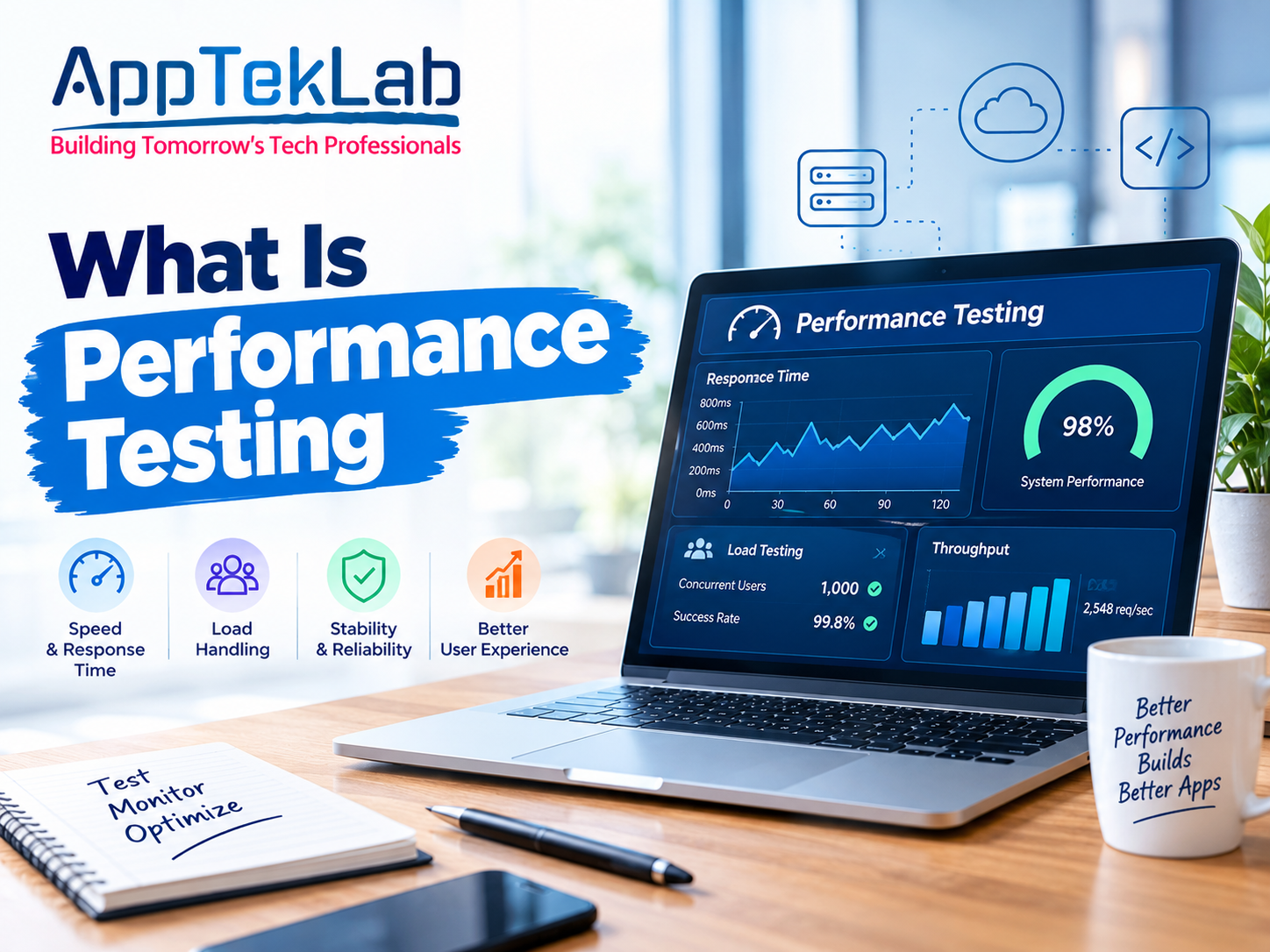
- Performance Testing Basics: Functional tests prove an application works under normal conditions, but performance tests verify it survives high user traffic. Understanding what is performance testing teaches you how to simulate concurrent traffic loads and identify server bottlenecks before release.
7. Adopt AI-Powered Automation and Autonomous Testing
The software testing industry is experiencing an architectural evolution. High-performing engineering teams increasingly use machine intelligence to generate test cases, synthesize dynamic test data, and self-heal brittle selectors.
Modern QA engineers work alongside intelligent testing tools to inspect DOM changes, predict defective code paths, and automate repetitive assertions. Learning how to orchestrate autonomous test runners gives you a substantial advantage in the job market. You can explore advanced, self-healing testing implementations through AI-powered software automation testing to future-proof your technical skill set.
Technical Skills Matrix for Automation Testers
To help you audit your technical readiness, here is a snapshot of foundational versus advanced competencies:
|
Skill Domain |
Foundational Competency |
Advanced Automation Competency |
|
Testing Methodology |
Test plans, boundary value analysis, STLC models. |
Risk-based automation, test pyramid architecture. |
|
Programming |
Basic variables, conditional logic, loops. |
OOP patterns, error handling, multithreading. |
|
Web UI Automation |
Simple record-and-playback, basic locators. |
Custom Page Object Model frameworks, Playwright, Cypress. |
|
Backend Testing |
Manual Postman API endpoint execution. |
Automated API assertion libraries, database validation. |
|
DevOps & Pipeline |
Pulling and pushing code via Git. |
Dockerized browser grids, CI/CD pipeline gating, parallel runs. |
4 Common Mistakes Beginners Make (And How to Avoid Them)
- Jumping into Code Without Testing Principles: Writing code without understanding equivalence partitioning or boundary conditions produces brittle test suites that miss obvious defects.
- Attempting to Automate Every Single Test: Not every test should be automated. Automate stable, repetitive regression workflows, and keep dynamic, exploratory tests in the hands of human testers.
- Using Brittle XPath Selectors: Avoid absolute XPath selectors (such as /html/body/div[2]/div/input) because they break whenever page layouts update. Always use semantic, stable attributes or CSS selectors.
- Ignoring Version Control: Many beginners store test scripts locally. You must manage your test code with Git and GitHub from day one to demonstrate professional engineering practices.
Frequently Asked Questions (FAQ)
Can I become an automation tester with no programming experience?
Yes. Many successful automation engineers transitioned from non-technical backgrounds or manual QA roles. Start with a beginner-friendly language like Python or JavaScript, focus on core object-oriented programming concepts, and then practice automating simple browser workflows.
How long does it take to become an automation tester?
With consistent daily practice of 10 to 15 hours per week, a beginner can learn manual fundamentals, a core programming language, and basic UI automation in three to four months. Reaching job readiness—including custom framework architecture, API automation, and CI/CD integration—typically requires six to eight months of practical effort.
Which automation tool should I learn first: Playwright or Selenium?
Playwright is generally faster to pick up for beginners because it includes built-in auto-waiting, native network request interception, and straightforward browser setup. However, Selenium remains widely used across legacy enterprise systems, so understanding its architecture is valuable for corporate roles.
Is automation testing a good career choice?
Yes. The demand for engineers who can build automated regression suites and gate CI/CD pipelines continues to expand. As companies increase release frequency, automated quality engineering remains one of the most reliable and well-compensated specializations in technology.
Launch Your Test Automation Career
Learning how to become an automation tester is a clear, step-by-step process of compounding technical skills. Begin with strong quality assurance fundamentals, gain proficiency in a single programming language, build modular test frameworks, and integrate your suites into continuous delivery pipelines.
To access hands-on training, live project mentoring, and professional certifications, explore the complete range of engineering tracks across all courses at AppTekLab to launch your testing career today.