Automation Testing Roadmap for Beginners: Step-by-Step Guide
Software development moves at lightning speed. Modern engineering teams push updates daily, making manual verification alone a costly bottleneck. Entering the software quality assurance space today requires mastering automated validation.
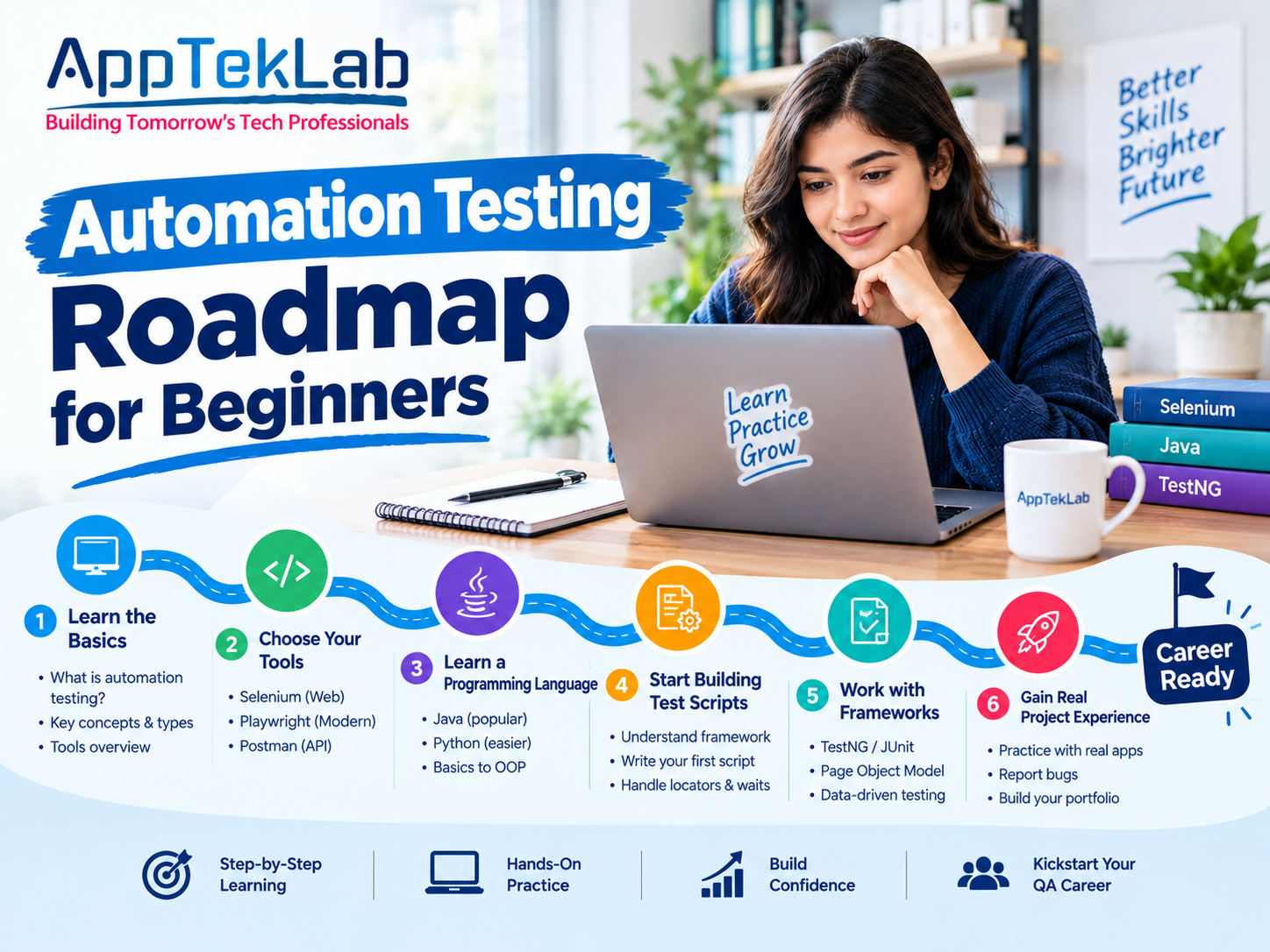
An automation testing roadmap for beginners gives you a clear path from manual basics to enterprise-level test architecture.
Navigating frameworks, programming languages, and CI/CD tools can feel overwhelming. This comprehensive guide outlines the exact learning stages, core skills, best practices, and career milestones needed to thrive as an automated test engineer. To build a solid foundation with expert-led mentorship, enrolling in targeted software testing courses gives you structured, career-ready preparation.
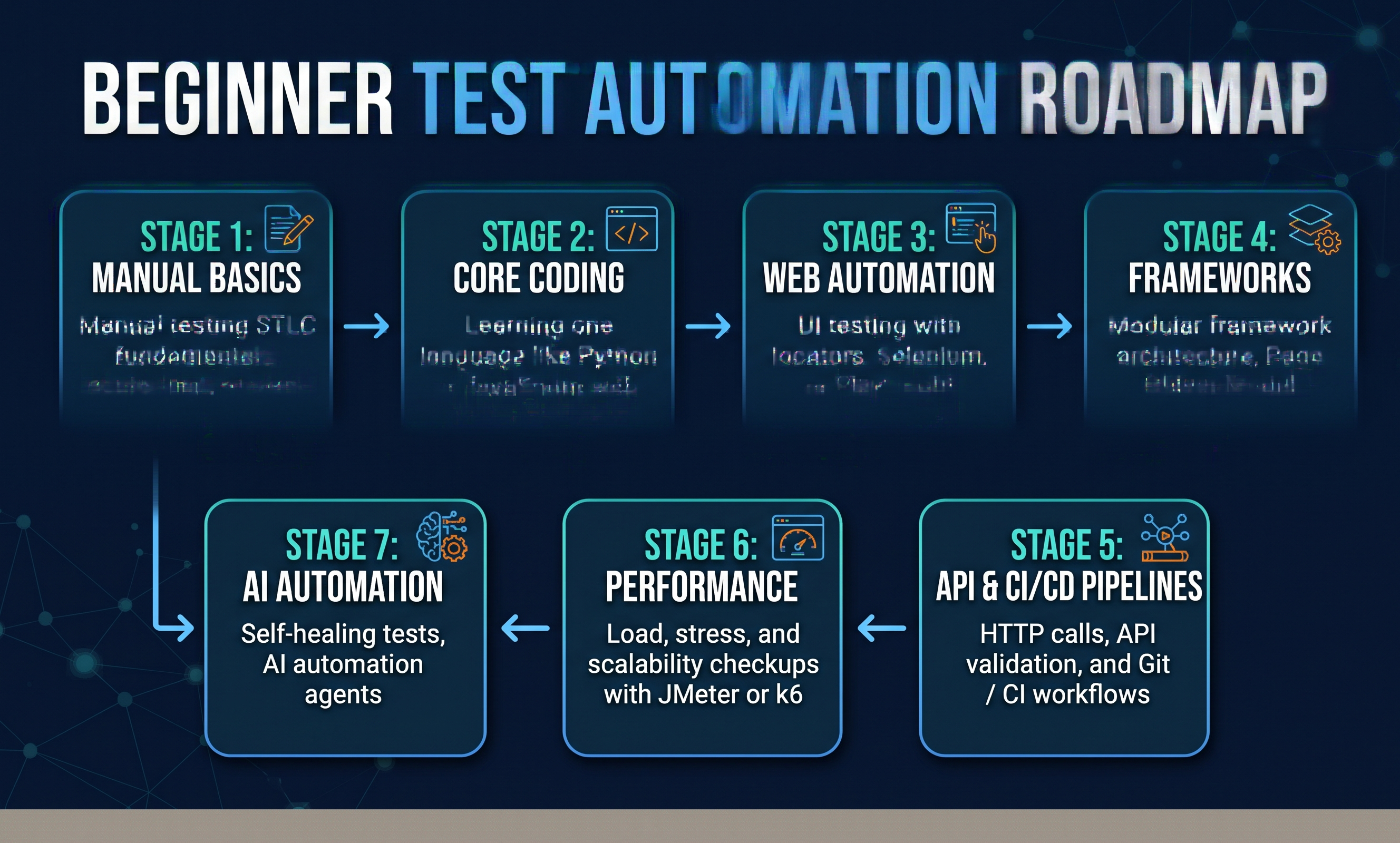
Complete Automation Testing Roadmap: 7 Essential Learning Stages
Becoming an automation engineer is not just about writing scripts; it requires understanding system architectures, test methodologies, and deployment pipelines.
To help you progress systematically, we have divided the automation journey into seven practical stages. Master each milestone sequentially to build reliable technical proficiency:
1. Master Manual Testing and STLC Fundamentals
Before automating a single test scenario, you must know what makes a test valuable. Automated scripts merely follow the instructions you give them; if your test logic is flawed, your automation will fail.
Begin by learning the Software Testing Life Cycle (STLC) and Software Development Life Cycle (SDLC). Understand boundary value analysis, equivalence partitioning, and risk-based test design. Learn how to draft detailed test plans, write reusable test cases, and log defects systematically.
Mastering these foundational concepts enables you to spot edge cases that scripts cannot catch alone. If you are starting completely from scratch, a specialized manual software testing course covers these foundational principles thoroughly.
2. Choose and Learn One Core Programming Language
Automation engineers write production-grade test code. Avoid trying to learn every language at once; select one high-demand language and master its core concepts:
- Python: Highly readable syntax, beginner-friendly, and very popular for test automation and machine learning workflows.
- JavaScript / TypeScript: Ideal for modern web applications using frameworks like Playwright and Cypress.
- Java: The industry enterprise staple, especially for Selenium and legacy enterprise infrastructure.
Focus on Object-Oriented Programming (OOP) concepts like classes, objects, inheritance, polymorphism, and abstraction. Learn data structures, error handling with try-catch blocks, and file I/O operations (such as parsing JSON, XML, and CSV files).
3. Learn Web UI Automation with Industry Tools
Once you understand core coding concepts, start interacting with web browsers programmatically. Web UI automation involves locating web elements, triggering actions, and validating screen responses.
Key concepts to master include:
- Locators: Writing robust CSS selectors and XPath expressions that do not break when UI styling changes.
- Handling Web Elements: Automating clicks, text entry, dropdown menus, alerts, iframes, and dynamic popups.
- Synchronization & Waits: Replacing unstable hardcoded sleeps with explicit waits and auto-waiting mechanisms to prevent flaky test runs.
Modern teams increasingly prefer frameworks like Playwright and Cypress due to built-in auto-waiting and developer-friendly debugging, alongside traditional tools like Selenium WebDriver.
4. Build Modular Test Automation Frameworks
Running standalone scripts in isolation is not scalable. Real-world teams build structured automation frameworks that are easy to maintain, scale, and debug.
Your framework design checklist should cover:
- Page Object Model (POM): Separating test logic from web page locators to keep code organized and maintainable.
- Test Runners & Assertions: Using runners like PyTest (Python), JUnit/TestNG (Java), or Mocha/Jest (JavaScript) for test execution and reporting.
- Data-Driven Testing: Decoupling test logic from inputs by feeding data via external JSON, Excel, or database sources.
- Reporting: Integrating detailed HTML dashboards, screenshots on failure, and video traces.
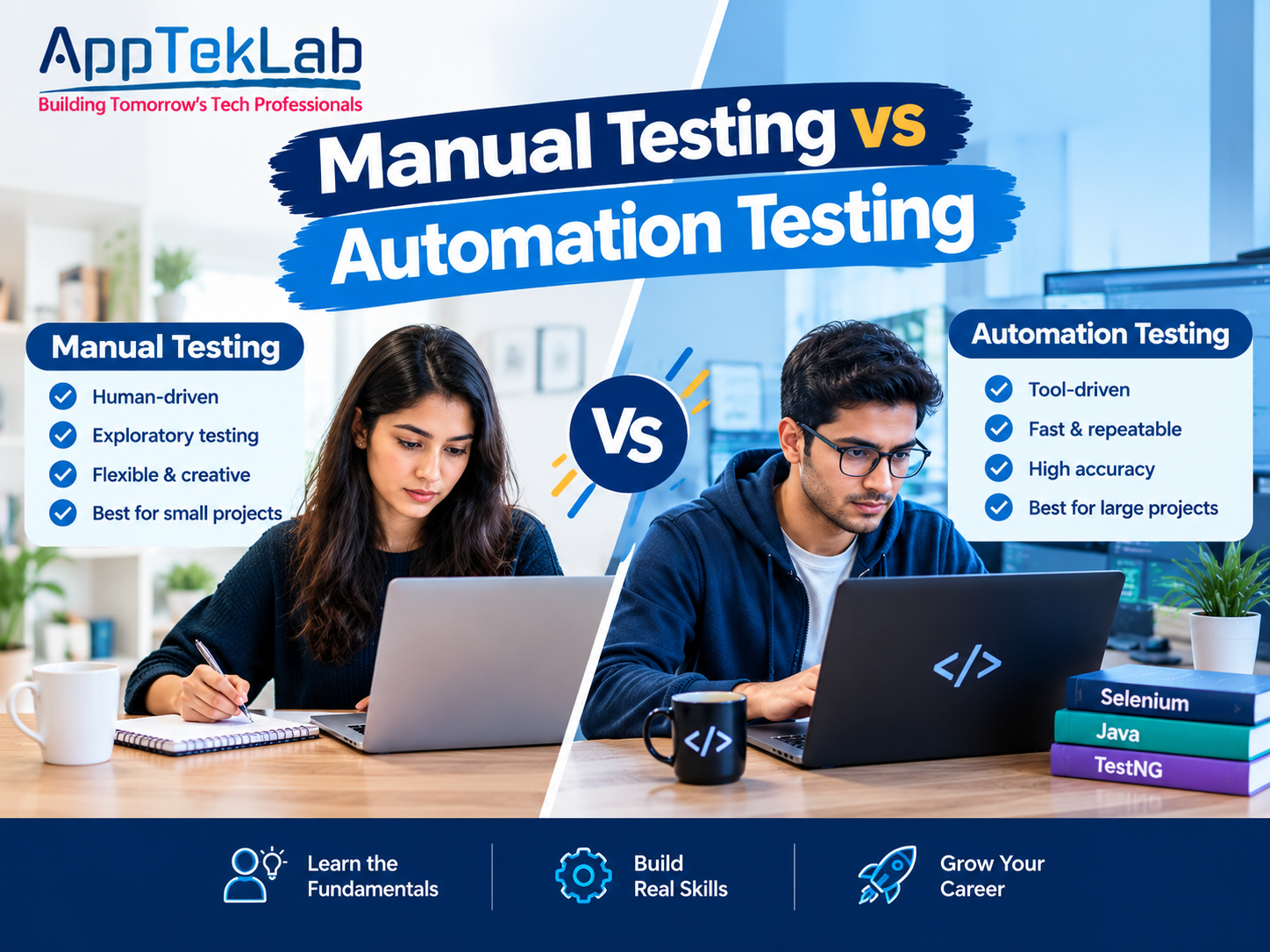
Knowing when to deploy automated scripts versus exploratory checks is critical; review our guide on Manual Testing vs Automation Testing to understand this dynamic.
5. Master API Testing and CI/CD Integrations
Modern web applications rely heavily on microservices and decoupled backends. Testing only through the browser UI is slow and resource-heavy.
API testing allows you to validate business logic directly at the server layer:
- HTTP Fundamentals: Understand request methods (GET, POST, PUT, DELETE), headers, cookies, and status codes.
- API Tools: Practice request authoring using Postman before writing automated API tests using libraries like Requests (Python) or REST Assured (Java).
- CI/CD Pipelines: Modern DevOps workflows run automated checks on every pull request. Learn Git commands (branching, merging, pull requests) and integrate tests into runners like GitHub Actions or Jenkins.
6. Introduce Automated Performance Testing
Functional automation ensures software behaves correctly, but performance testing ensures it survives real-world traffic surges.
As an emerging automation specialist, learn how backend microservices respond under load:
- Simulate Concurrency: Learn tools like Apache JMeter or k6 to simulate hundreds or thousands of virtual users hitting target endpoints.
- Analyze Metrics: Track transactions per second, latency, network errors, and server CPU bottlenecks.
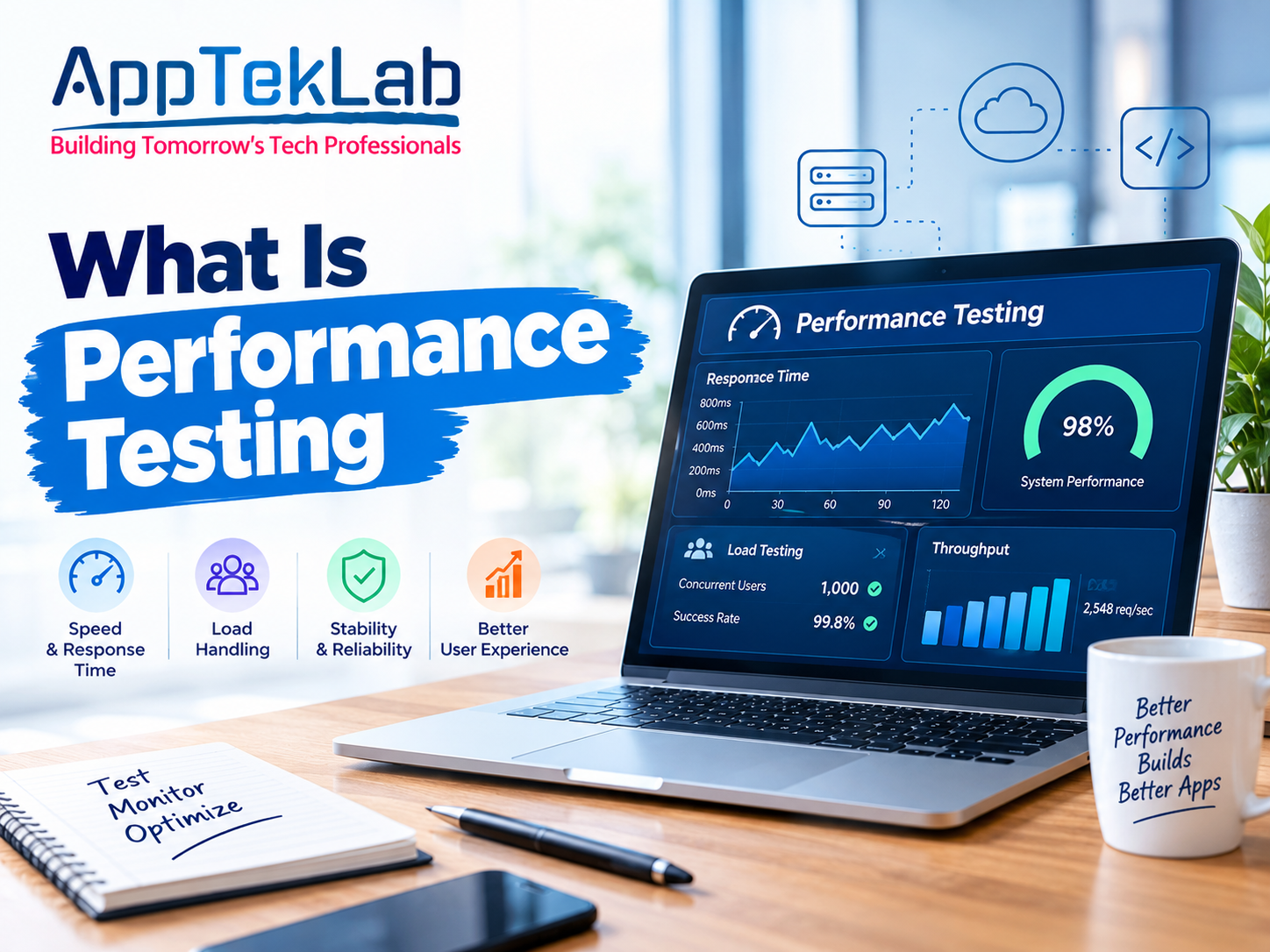
To learn how stress, spike, and load testing protect revenue and stability, read our breakdown of what is performance testing.
7. Leverage AI-Powered Automation Testing
The test automation space is evolving rapidly with artificial intelligence. High-performing QA teams no longer spend hours writing repetitive boilerplate scripts or manually fixing broken locators.
Modern QA engineers use AI tools to generate edge-case test data, self-heal broken selectors, and synthesize test assertions directly from requirements. Mastering prompt engineering and autonomous testing agents gives you an immediate competitive edge. Explore real-world autonomous workflows through AI-powered software automation testing to stay ahead of the hiring curve.
Core Skills Breakdown: Manual vs. Automated QA
The transition from manual testing to automation requires adding technical depth without losing user-focused analytical skills:
|
Skill Category |
Foundational Focus |
Automation Engineering Focus |
|
Testing Approach |
Exploratory, visual checks, usability flows. |
Repetitive regression, API checks, data sweeps. |
|
Tool Stack |
Jira, TestRail, Chrome DevTools. |
Playwright, Selenium, Postman, Git, CI/CD runners. |
|
Core Competency |
Empathy, edge-case probing, user journeys. |
Code architecture, OOP, framework modularity. |
|
Execution Layer |
Front-end browser and device interaction. |
Headless browsers, HTTP requests, scheduled CI builds. |
|
Troubleshooting |
Visual UI bugs and workflow bottlenecks. |
Stack traces, server logs, network payload errors. |
4 Common Beginner Mistakes to Avoid
- Skipping Manual Testing Concepts: Diving into code without understanding boundary conditions or test case design leads to brittle, low-value test suites.
- Automating Everything: Not all features should be automated. Automate stable, high-value regression paths and leave dynamic or short-lived features to exploratory manual checks.
- Ignoring Framework Architecture: Writing hardcoded scripts without adopting Page Object Model or data-driven design creates an unmaintainable testing codebase.
- Neglecting Version Control: Every automation engineer must know Git. Practice commit hygiene, branch management, and resolving merge conflicts daily.
Frequently Asked Questions (FAQ)
Can I learn automation testing without prior coding experience?
Yes. Many successful QA automation engineers started with non-technical backgrounds. Begin with a beginner-friendly language like Python or JavaScript. Focus on core syntax, conditionals, loops, and OOP concepts before writing browser scripts.
How long does it take to learn automation testing from scratch?
A beginner dedicating 10 to 15 hours per week can master core programming, basic web automation, and API testing within four to six months. Becoming proficient in custom framework design, CI/CD pipelines, and enterprise automation typically takes six to nine months of hands-on practice.
Which is better for beginners: Playwright or Selenium?
Playwright is generally easier for beginners to configure because it features built-in auto-waiting, native network interception, and bundled browser binaries. Selenium remains essential for legacy enterprise systems, but modern startups and product teams are rapidly adopting Playwright for faster CI execution.
Is automation testing in higher demand than manual testing?
Yes. While manual testing remains vital for usability, UX reviews, and exploratory sessions, modern agile teams look for engineers who can automate regression suites and integrate tests into CI/CD pipelines to support fast releases.
Start Your Test Automation Career
Mastering test automation is a gradual journey of progressive skill building. Start by understanding core quality principles, learn a single programming language well, and build hands-on projects automating real-world web and API workflows.
To view full learning curricula, live project mentorship, and certification pathways, explore all courses at AppTekLab and take your first step toward becoming an industry-ready automation engineer today.