What Is Agentic AI in Software Testing? The 2027 Architectural Guide
Software engineering lifecycles are operating at unprecedented speed. Product teams deploy code multiple times a day across complex, distributed microservice environments.
Traditional automated suites often struggle to keep pace. Brittle element selectors break, maintenance backlogs compound, and engineering teams lose hours debugging flaky CI/CD test runs.
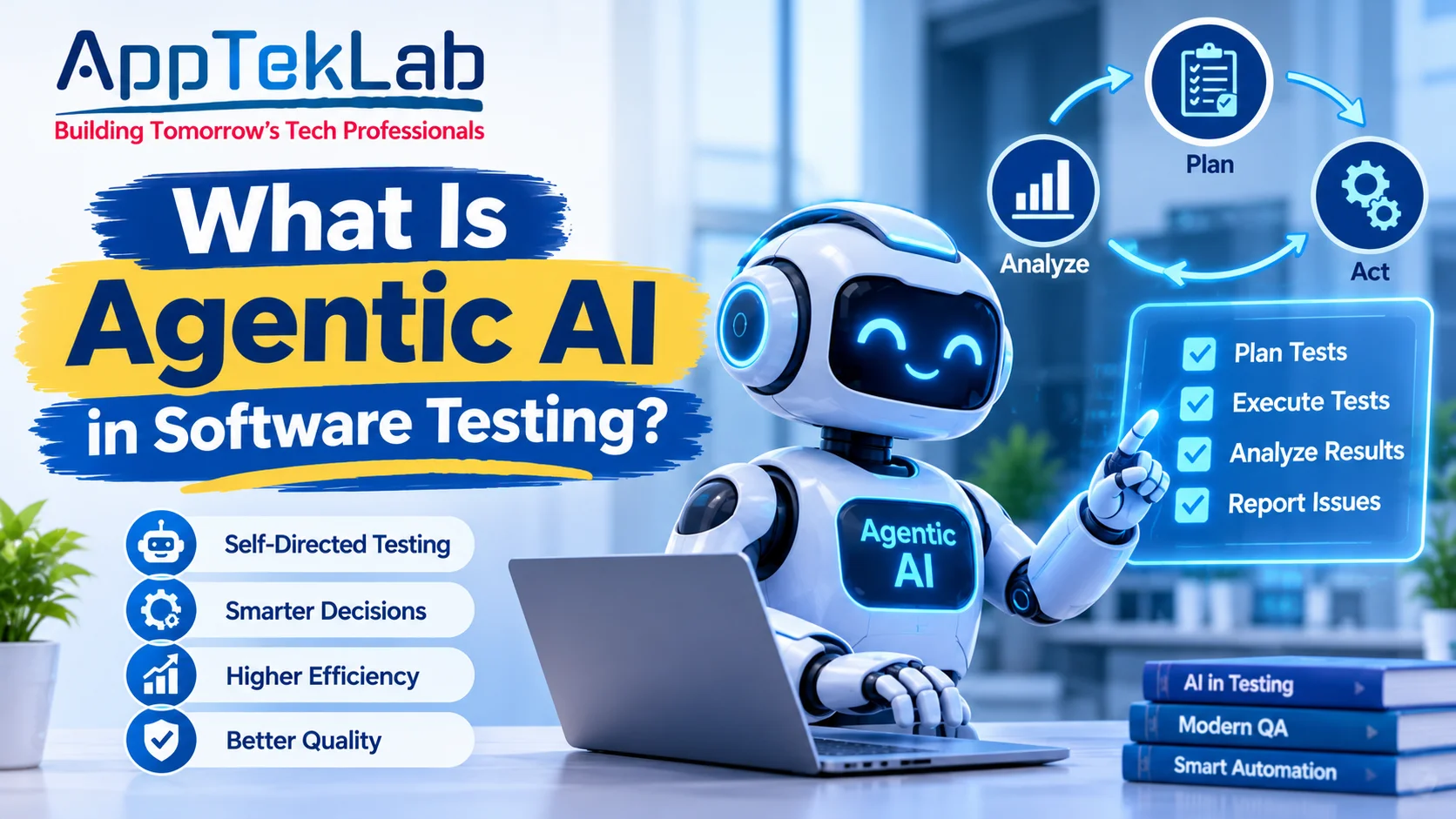
To resolve these bottlenecks, the testing industry is undergoing an architectural leap. Understanding what is agentic AI in software testing reveals how autonomous agents go beyond static test automation.
Unlike passive chatbots or basic code completion tools, agentic AI actively reasons, plans, acts, and self-heals. It transforms quality engineering from rigid script execution into autonomous, intelligent quality assurance.
To prepare for this industry shift, exploring practical workflows in AI-powered software automation testing provides the hands-on engineering foundation modern QA teams require.
What Is Agentic AI in Software Testing? Core Dimensions Explained
Agentic AI in software testing refers to autonomous AI systems designed with agency. These systems perceive software environments, make goal-oriented decisions, execute complex multi-step user actions, and adapt when user interfaces change.
Basic generative AI merely generates code snippets or suggests syntax from a prompt. In contrast, an agentic AI system functions as an autonomous quality engineer.
It observes application state, determines which tests to create, navigates dynamic web interfaces, inspects network payloads, and repairs broken test paths automatically.
To understand how this autonomous technology works, we examine its core architecture across seven key dimensions:
+-------------------------------------------------------------------------------+
| Agentic AI Testing Architecture |
| |
| [Perception: DOM & API] ──> [Reasoning Engine: LLM / SLM] ──> [Tool Action] |
| ▲ │ |
| │ ▼ |
| [Self-Healing & Memory Loop] <── [Outcome Validation] |
+-------------------------------------------------------------------------------+
1. From Script-Based Automation to Autonomous Agency
Traditional test automation frameworks like Selenium or Playwright follow deterministic, rigid paths. If an engineer scripts a test to click an element at a specific selector, the test runner executes that command blindly. If a developer alters the CSS class or refactors the DOM tree, the test runner crashes.
Agentic AI replaces hardcoded instruction sequences with autonomous goal-directed behavior.
Instead of requiring fragile element selectors, an engineer provides a high-level goal: "Verify that a guest user can add a discounted product to the cart and complete checkout."
The agentic system:
- Analyzes visual layouts and DOM accessibility trees dynamically.
- Reasons through the sequence of interactions required to achieve the objective.
- Discovers and clicks appropriate buttons based on contextual intent rather than static code strings.
- Confirms backend data mutations across databases and network endpoints.
2. The Core Architecture of Agentic Testing Systems
Agentic AI relies on a closed-loop architectural framework composed of four essential modules:
- Perception Module: Scans web interfaces, DOM states, accessibility trees, REST APIs, and application performance metrics in real time.
- Reasoning & Planning Engine: Utilizes Large Language Models (LLMs) and specialized Small Language Models (SLMs) to decompose high-level testing criteria into discrete, step-by-step actions.
- Tool-Use & Action Layer: Executes actions programmatically through browser automation drivers, HTTP clients, and database connectors.
- Memory & Self-Reflection Loop: Compares actual system responses against expected outcomes, logs discrepancies, and updates internal execution memories to avoid repeating failed paths.
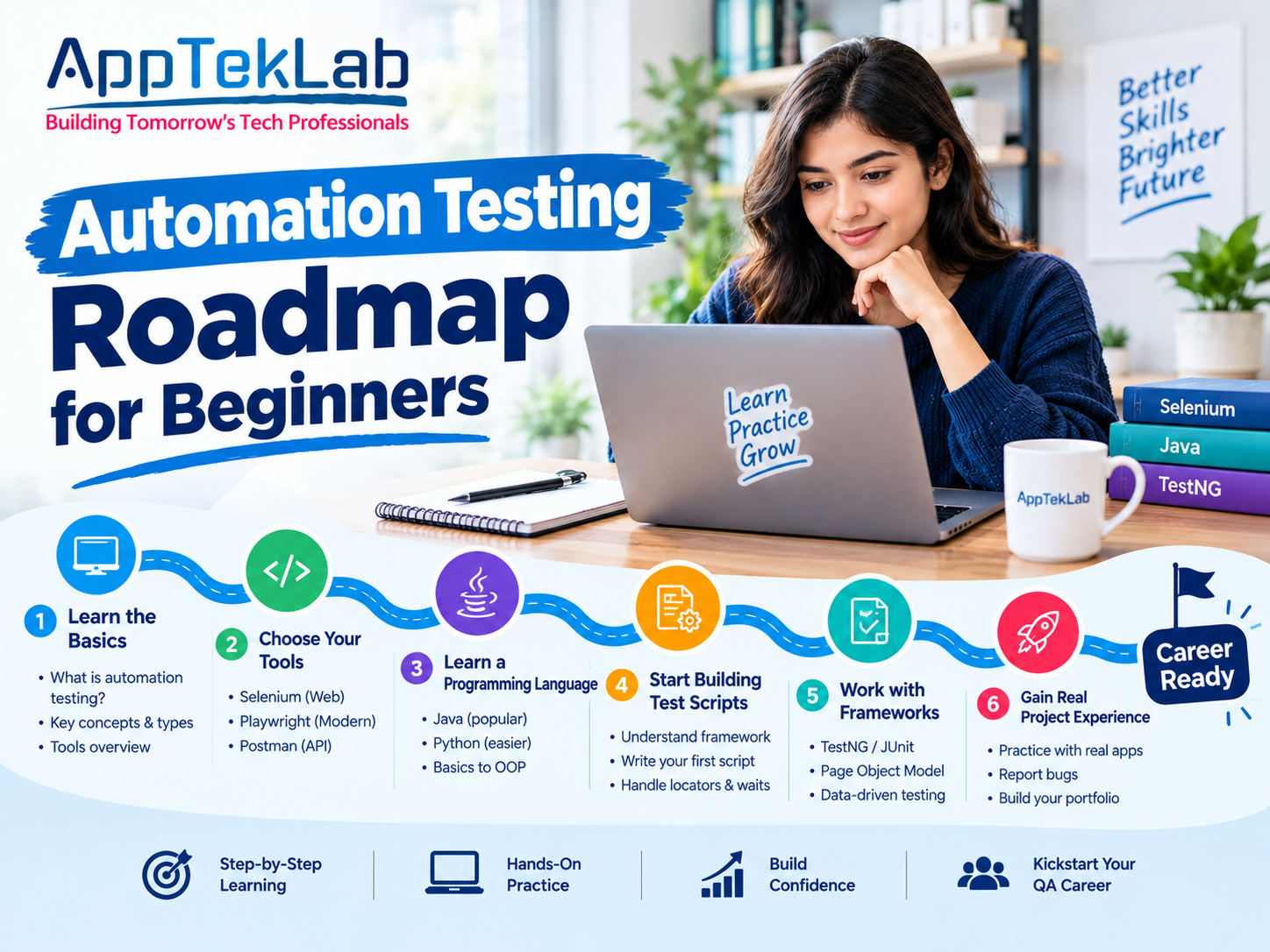
Building and maintaining these advanced systems requires a firm grasp of software fundamentals. Reviewing our comprehensive automation testing roadmap for beginners outlines the technical path from initial coding to advanced framework architecture.
3. Generative AI vs. Agentic AI: The Crucial Difference
Many teams confuse standard generative AI tools with true agentic systems. While both use foundation models, their execution capabilities differ significantly:
|
Evaluation Vector |
Traditional Generative AI |
Agentic AI in Testing |
|
Operational Mode |
Passive and prompt-reactive. |
Autonomous and goal-driven. |
|
Execution Ability |
Outputs text or script snippets. |
Interacts directly with live browsers and APIs. |
|
Error Handling |
Requires human debugging when code fails. |
Self-heals broken locators and retries autonomously. |
|
Environmental Context |
Limited to the input prompt window. |
Inspects live runtime environments and network trees. |
|
Decision Making |
Single-turn static inference. |
Multi-step reasoning loops with adaptive action planning. |
4. Dynamic Self-Healing and Flaky Test Elimination
Test maintenance represents one of the largest resource drains in modern QA engineering. Engineering teams often spend hours diagnosing why a nightly build failed, only to find an element identifier was renamed during a minor UI update.
Agentic AI eliminates brittle test maintenance through real-time self-healing:
- Contextual Anchor Tracking: Agents track elements using semantic intent, relative screen position, and visual features rather than relying solely on static XPath paths.
- Autonomous Selector Repair: If an ID or class name changes, the agent deduces the correct element, completes the execution, and automatically opens a pull request updating the test framework.
- Flakiness Filtering: The agent distinguishes between genuine backend code regressions and environmental network timeouts, significantly reducing false-positive alerts.
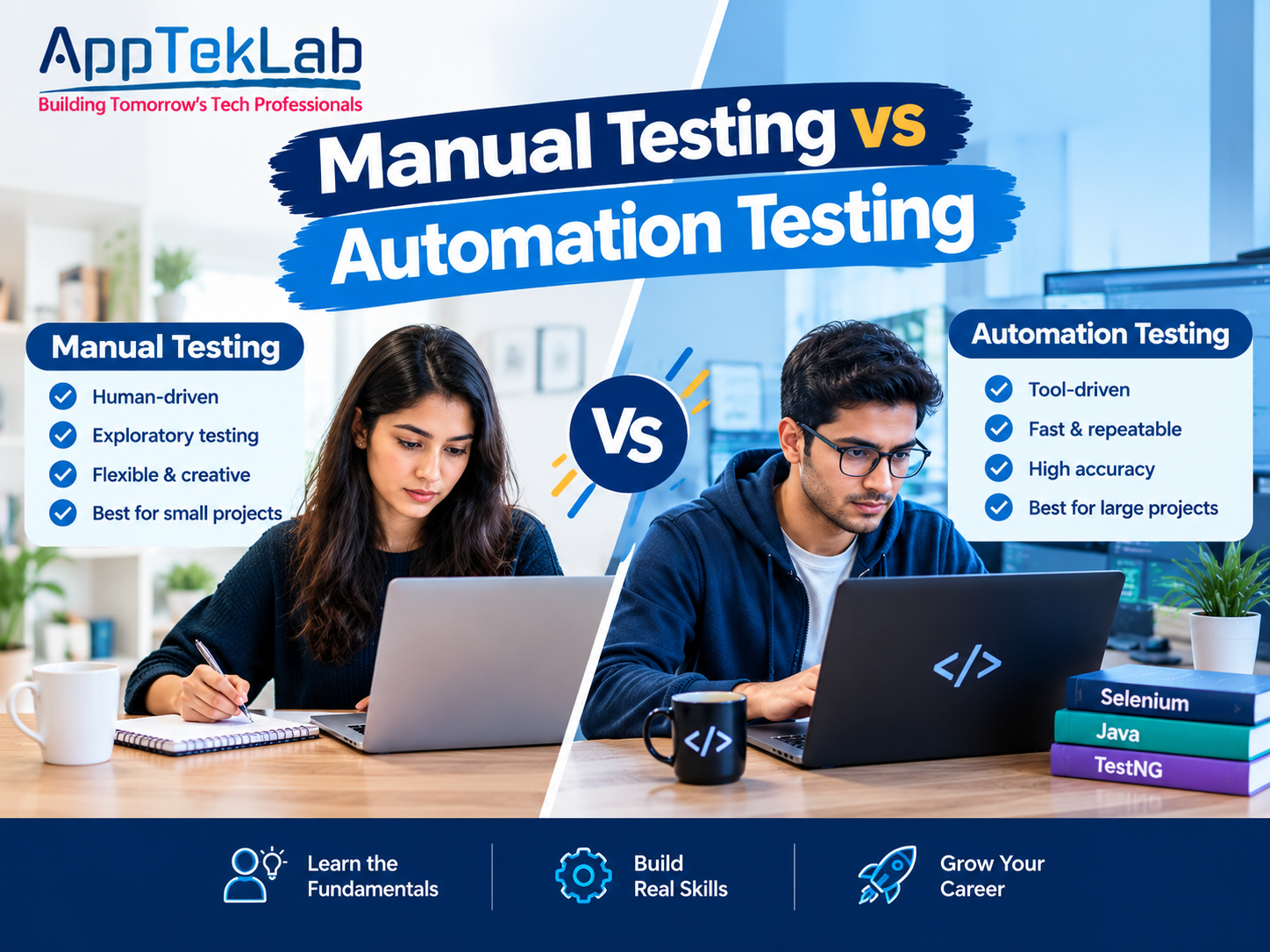
Understanding these automation mechanics helps teams balance speed with manual oversight. Learn how these operational trade-offs work in our deep dive on Manual Testing vs Automation Testing.
5. Autonomous API Probing and Microservice Validation
Modern cloud platforms rely on interconnected backend services communicating through complex APIs. Testing only through the browser interface leaves critical backend logic unverified.
Agentic AI agents actively inspect Swagger/OpenAPI documentation, observe runtime traffic, and generate comprehensive API test scenarios autonomously:
- Contract and Schema Validation: Agents generate edge-case payloads to verify that microservices strictly adhere to payload contracts.
- Stateful Request Chaining: Agents dynamically extract bearer tokens, parse session IDs, and chain complex multi-endpoint API sequences.
- Negative Scenario Probing: Autonomous testing agents craft malicious inputs, edge-case data types, and boundary anomalies to uncover hidden server vulnerabilities before deployment.
6. Continuous Performance and Load Testing Orchestration
Functional correctness ensures that an application responds accurately, but systems must also handle concurrent real-world traffic.
Agentic systems continuously bridge functional validation with infrastructure load testing:
- Predictive Load Generation: Instead of running static load profiles, agents simulate realistic, fluctuating user traffic patterns across checkout flows and search endpoints.
- Autonomous Bottleneck Identification: When response times spike, agentic monitors analyze server CPU thresholds, memory allocation, and database latency.
To understand how system resources, throughput, and latency are evaluated under strain, explore our comprehensive guide explaining what is performance testing.
7. The Human-in-the-Loop Hybrid QA Model
Agentic AI does not eliminate human quality engineers. Instead, it automates repetitive regression checks, test synthesis, and locator repairs, allowing human testers to focus on high-value cognitive quality work.
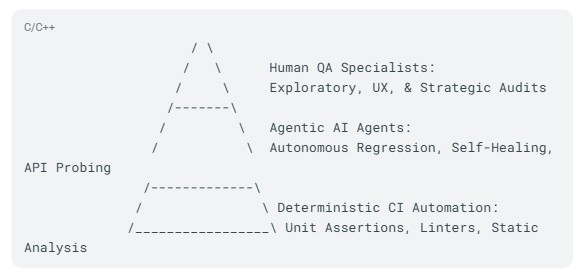
Human testers contribute contextual intuition, ethical evaluation, usability scrutiny, and business domain expertise that machine agents cannot replicate.
Those interested in entering the software quality assurance space can study foundational inspection methodologies through a structured manual software testing course. Mastering these testing fundamentals ensures you can direct and audit agentic systems effectively.
4 Practical Implementation Steps for Engineering Teams
Adopting agentic AI testing requires a systematic transition across your delivery pipeline:
- Audit Existing Testing Suites: Identify the most brittle UI tests and repetitive regression suites in your repository. These tests are ideal candidates for agentic self-healing.
- Establish Environment Observability: Provide your testing agents with programmatic access to DOM structures, console error logs, network requests, and API documentation.
- Set Up Supervised Autonomy: Allow testing agents to generate tests and suggest selector repairs in a separate branch first, requiring human code reviews before merging into production.
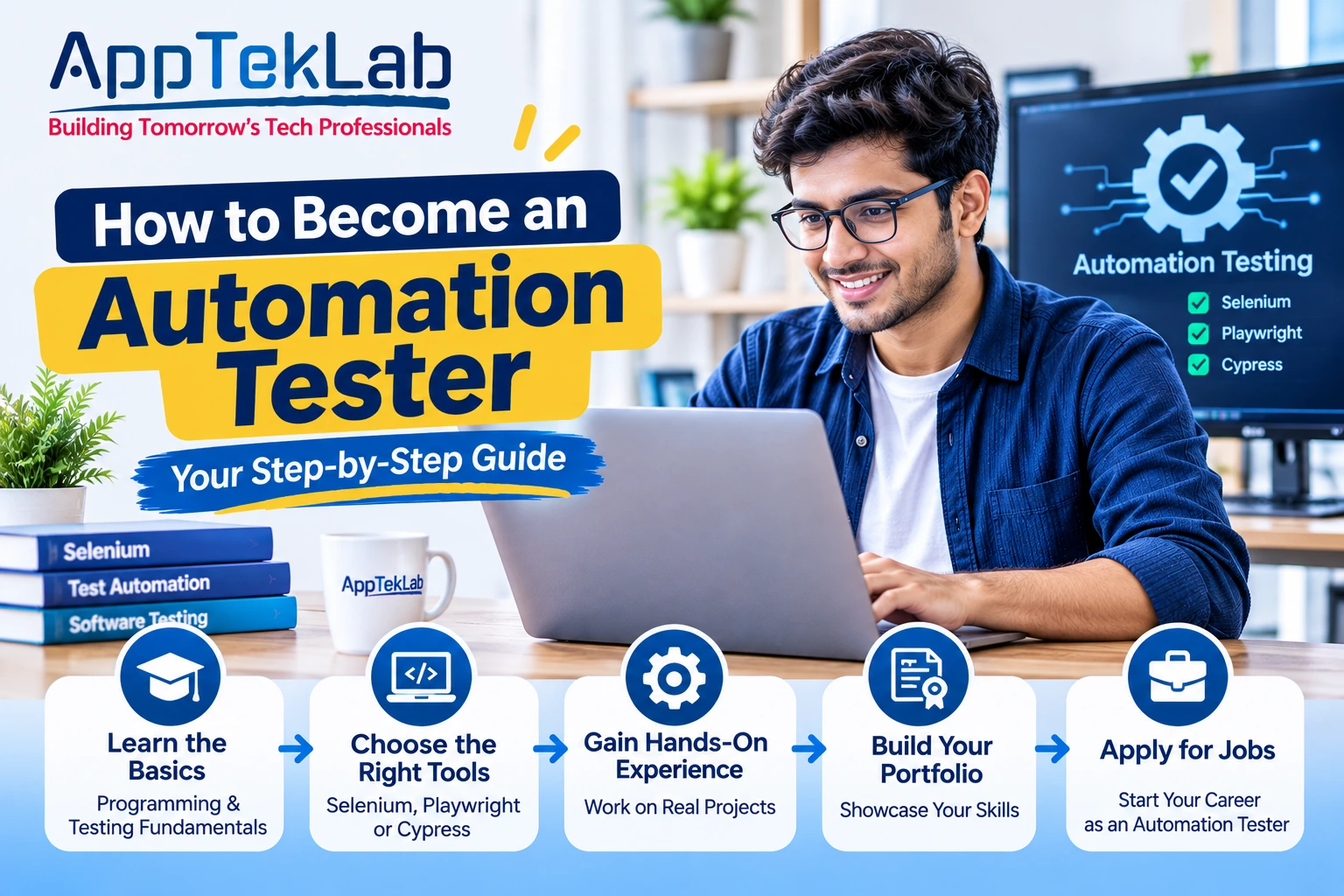
- Upskill Your QA Team: Equip your quality engineers with programming and AI orchestration skills. A solid background in how to become an automation tester ensures engineers understand how to govern autonomous test systems within existing pipelines.
Frequently Asked Questions (FAQ)
What is agentic AI in software testing?
Agentic AI in software testing refers to autonomous AI systems capable of perceiving an application, planning test strategies, executing user interactions, and self-healing broken tests without requiring manual script updates.
Will agentic AI replace human software testers?
No. While agentic AI automates repetitive execution, script generation, and maintenance, human engineers remain essential for exploratory testing, usability analysis, and strategic risk evaluation.
How does agentic AI self-heal broken test scripts?
When an element's selector changes, agentic systems use visual context, DOM hierarchy, and semantic intent to locate the target component. The agent completes the test run and updates the test script automatically.
Do QA engineers need coding skills to work with agentic AI?
Yes. Quality engineers need programming and architectural knowledge to build integration hooks, audit generated test cases, configure CI/CD pipelines, and manage the infrastructure supporting autonomous agents.
Build the Future of Software Quality
Agentic AI marks an evolutionary shift in software quality assurance. By replacing rigid test scripts with autonomous, self-healing quality agents, modern engineering teams can accelerate delivery cycles, lower maintenance costs, and deploy software with greater confidence.
To build industry-standard competencies in automated testing, framework design, and modern quality architectures, explore the technical training tracks across all courses at AppTekLab to advance your engineering career today.