Traditional AI vs Generative AI vs Agentic AI: Complete 2027 Architectural Guide
Artificial intelligence has evolved through three distinct generations of software engineering capability. Understanding traditional AI vs generative AI vs agentic AI is critical for technical leaders, developers, and quality assurance engineers designing modern enterprise systems.
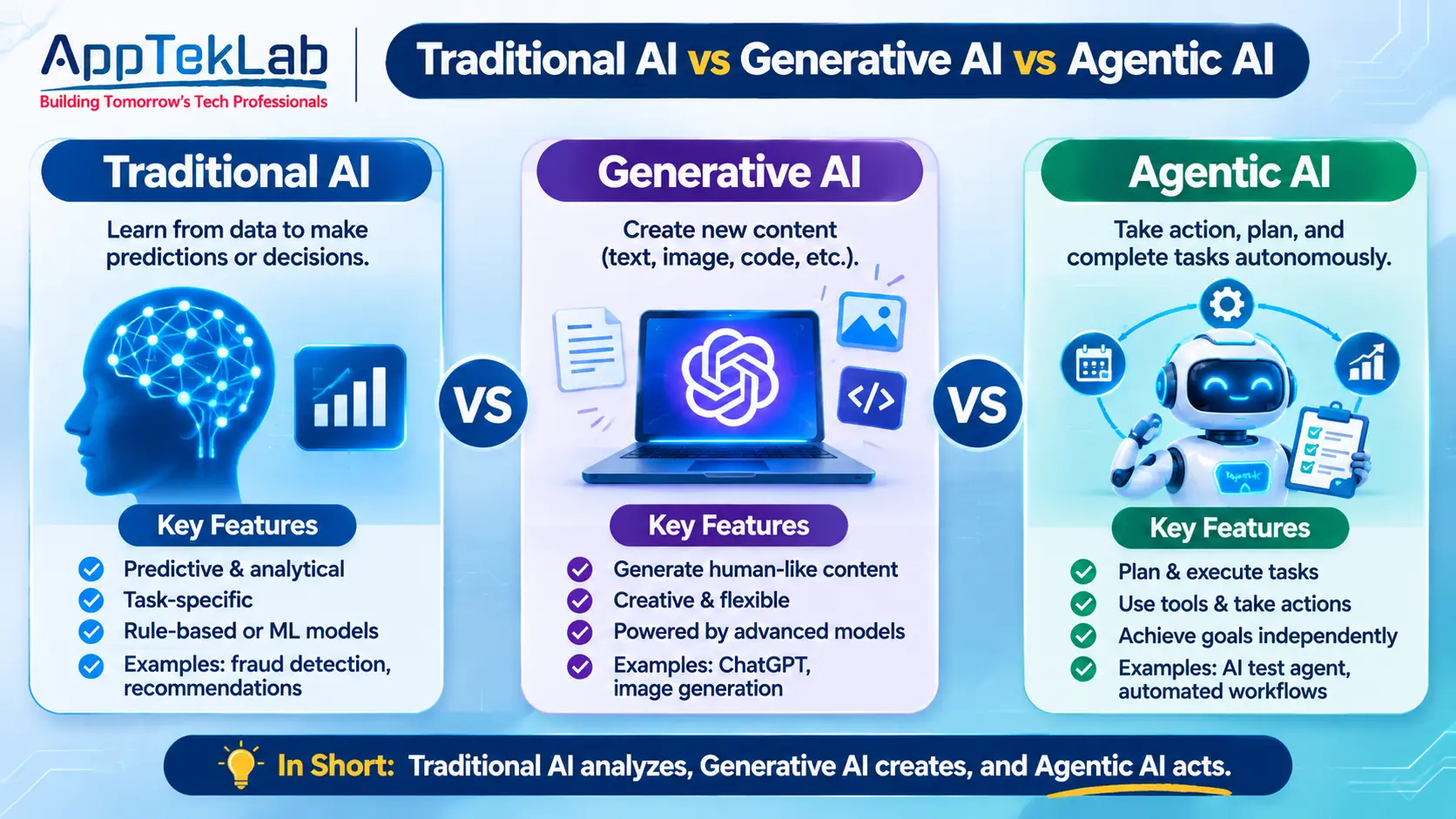
Each paradigm solves fundamentally different computational problems. Traditional AI excels at predictive pattern recognition and rule-based classification. Generative AI produces brand-new text, code, and synthetic media from prompts. Agentic AI takes an active step further by perceiving live environments, planning multi-step workflows, and executing goals autonomously.
This comprehensive guide unpacks the architectural foundations, operational mechanics, side-by-side comparisons, and quality engineering applications of all three AI paradigms. To see how modern engineering teams apply autonomous and prompt-driven models in production, explore specialized training in AI-powered software automation testing.
Traditional AI vs Generative AI vs Agentic AI: 7 Core Architectural Dimensions
Navigating today's AI ecosystem requires separating marketing buzzwords from actual engineering mechanics. While all three paradigms rely on machine learning models, their autonomy levels, execution loops, and system interfaces differ dramatically.
Below, we examine the evolution and practical boundaries of these three technologies across seven core engineering dimensions:
1. What Is Traditional AI? Predictive Analytics and Deterministic Rules
Traditional AI (often called Narrow AI or Predictive AI) focuses on analyzing historical datasets to classify inputs, detect anomalies, or forecast numerical outcomes. It operates within strictly defined boundaries programmed or trained by data scientists.
Common algorithms include decision trees, random forests, support vector machines, and classic supervised neural networks. Traditional AI does not invent new information; instead, it maps incoming variables to known categories or probabilities.
Primary Enterprise & QA Use Cases:
- Fraud Detection & Risk Scoring: Flagging anomalous banking transactions based on historical customer spending patterns.
- Predictive Defect Analytics: Analyzing historical Git commit churn to predict which code modules carry the highest bug probability.
- Visual Regression Pixel Diffing: Comparing baseline UI screenshots against current builds to spot layout shifts.
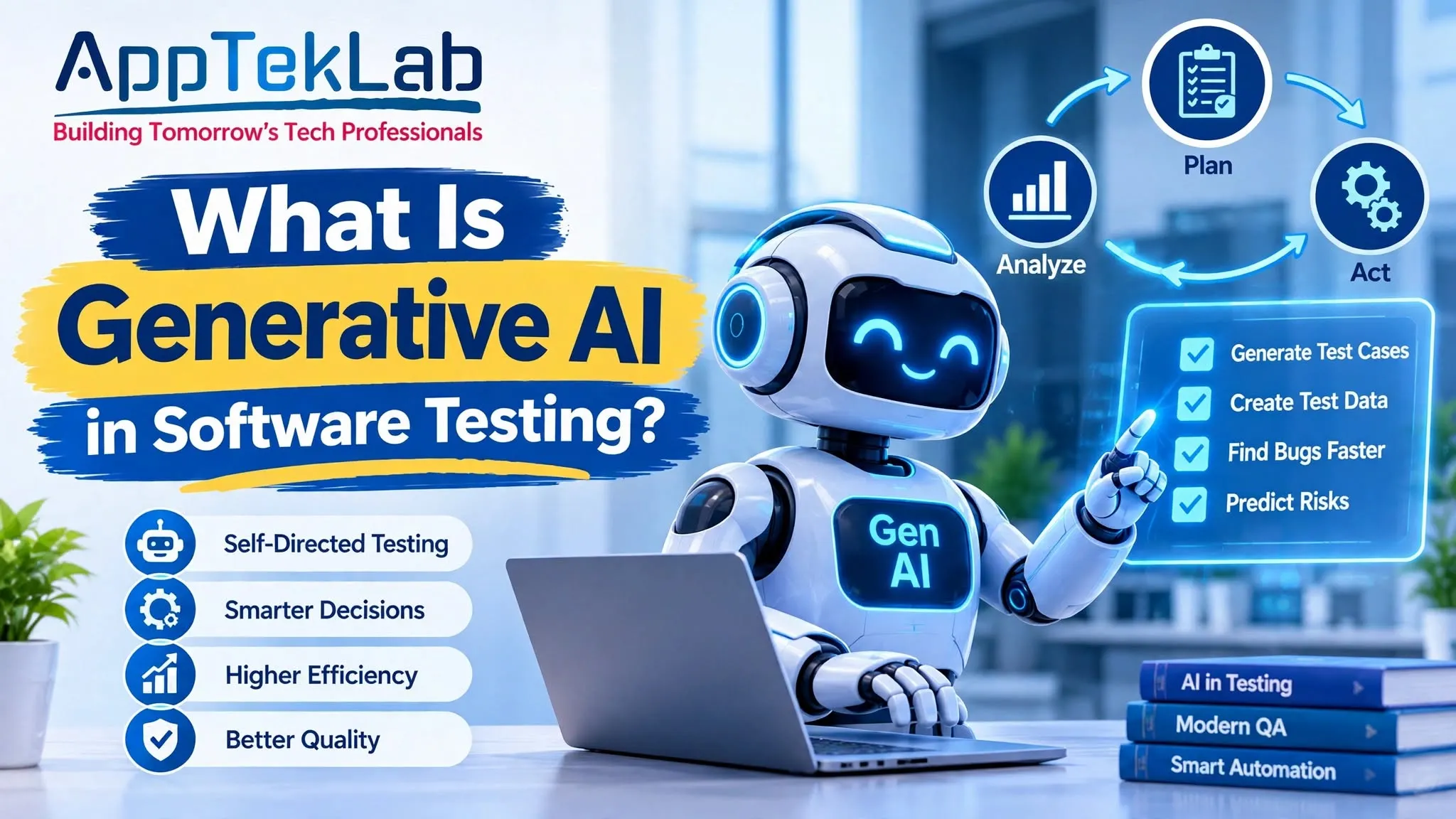
2. What Is Generative AI? Prompt-Driven Content and Code Creation
Generative AI uses foundation models—such as Large Language Models (LLMs) and diffusion models—to synthesize completely new artifacts. Trained on vast corpora of text, source code, and multimodal data, generative models predict the next most likely token or pixel to fulfill a user's prompt.
Unlike traditional models that output a classification label or probability score, generative AI produces human-like prose, executable software functions, SQL queries, and synthetic datasets. However, standard generative AI remains passive: it waits for a human prompt, generates an output, and stops.
For a deeper look into how LLMs accelerate test design and script creation, read our complete guide on what is generative AI in software testing.
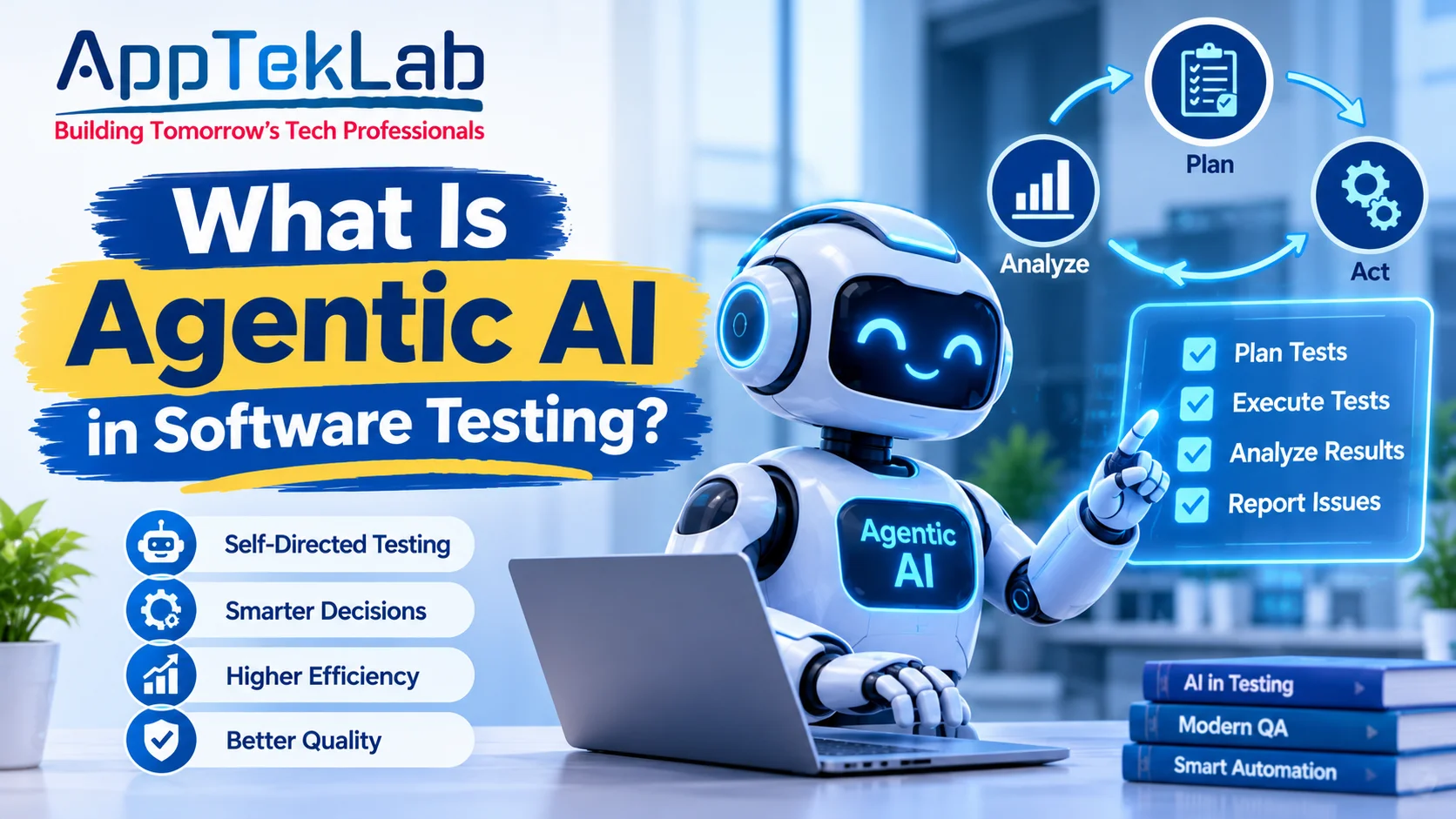
3. What Is Agentic AI? Goal-Driven Autonomous Execution
Agentic AI represents the shift from passive content generation to autonomous, goal-oriented action. Built around reasoning engines (LLMs/SLMs) paired with external tool access and persistent memory, an AI agent perceives its environment, formulates a multi-step plan, executes actions, and evaluates results in a continuous loop.
Rather than requiring step-by-step instructions, an agentic system accepts a high-level objective. If an API returns an unexpected error or a web interface changes layout mid-task, the agent reasons through the obstacle, adapts its strategy, and completes the mission independently.
Discover how autonomous agents self-heal broken locators and execute end-to-end validation in our deep dive on what is agentic AI in software testing.
4. Side-by-Side Comparison Matrix: Architecture, Autonomy, and Output
Comparing all three AI paradigms across core engineering vectors clarifies where each delivers maximum value:
|
Evaluation Dimension |
Traditional AI |
Generative AI |
Agentic AI |
|
Core Objective |
Classify, predict, and optimize based on historical data. |
Create original text, code, images, and synthetic data. |
Plan, execute, and adapt multi-step workflows autonomously. |
|
Operational Trigger |
Structured data ingestion or scheduled batch jobs. |
Direct human prompt or single API inference call. |
High-level goal or environmental event trigger. |
|
Level of Autonomy |
Low (strictly bounded by training rules and features). |
Low-to-Moderate (requires human prompting and execution). |
High (self-directed reasoning, tool use, and error recovery). |
|
Environment Interaction |
Reads static feature tables; outputs scores or labels. |
Operates inside a text/code prompt context window. |
Interacts directly with live browsers, APIs, shells, and DBs. |
|
Memory & State |
Stateless inference per prediction request. |
Short-term context window within a single session. |
Persistent short-term and long-term vector/episodic memory. |
|
Error Handling |
Fails or outputs low confidence on out-of-distribution data. |
Requires a human to re-prompt and debug flawed code. |
Self-reflects, adjusts plans, and retries failed steps automatically. |
5. Control Loops: Single-Turn Inference vs. Closed-Loop Agency
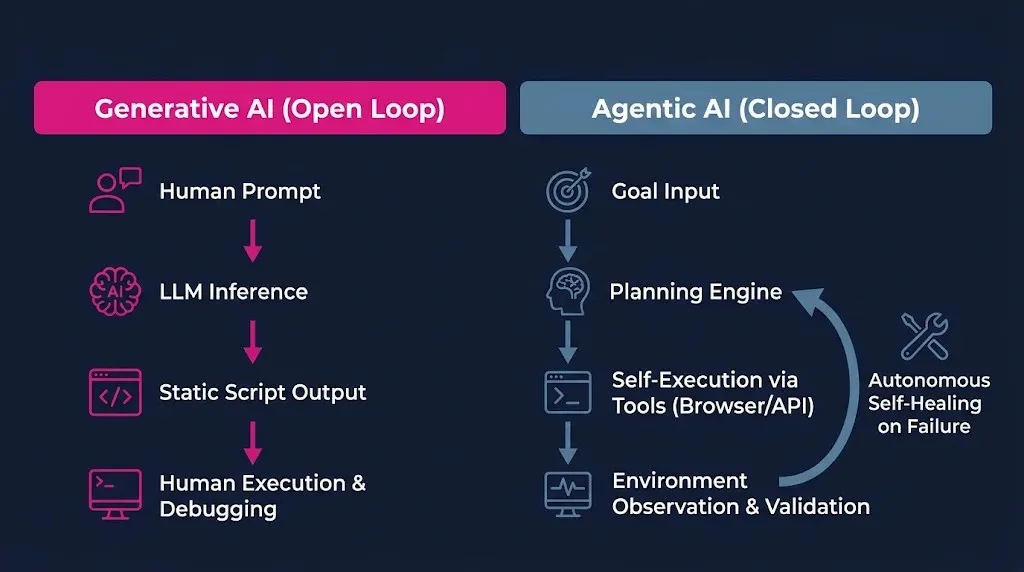
The fundamental architectural divide between generative AI and agentic AI lies in their execution loops.
In a Generative AI open-loop workflow, a QA engineer prompts an LLM to write a Playwright test script. The model generates the static code block and stops, requiring the human engineer to copy, debug, run, and maintain that script manually.
In an Agentic AI closed-loop workflow, the autonomous agent connects directly to browser drivers like Playwright, Model Context Protocol (MCP) servers, and observability platforms such as Splunk or Grafana. It navigates the live application, inspects DOM accessibility trees, executes assertions, diagnoses failures from server logs, and opens pull requests automatically.
6. Real-World Applications in Modern Software Quality Assurance
High-performing engineering organizations do not abandon older AI models when adopting newer ones. Instead, they layer all three technologies across the Software Testing Life Cycle (STLC):
- Traditional AI Layer: Analyzes historical CI/CD failure logs to prioritize which regression suites run first during pull request gates.
- Generative AI Layer: Converts Jira user stories into comprehensive boundary-value test scenarios and generates privacy-compliant synthetic SQL test data.
- Agentic AI Layer: Executes autonomous end-to-end user journeys across browsers, self-heals broken CSS/XPath selectors during runtime, and validates microservice contracts.
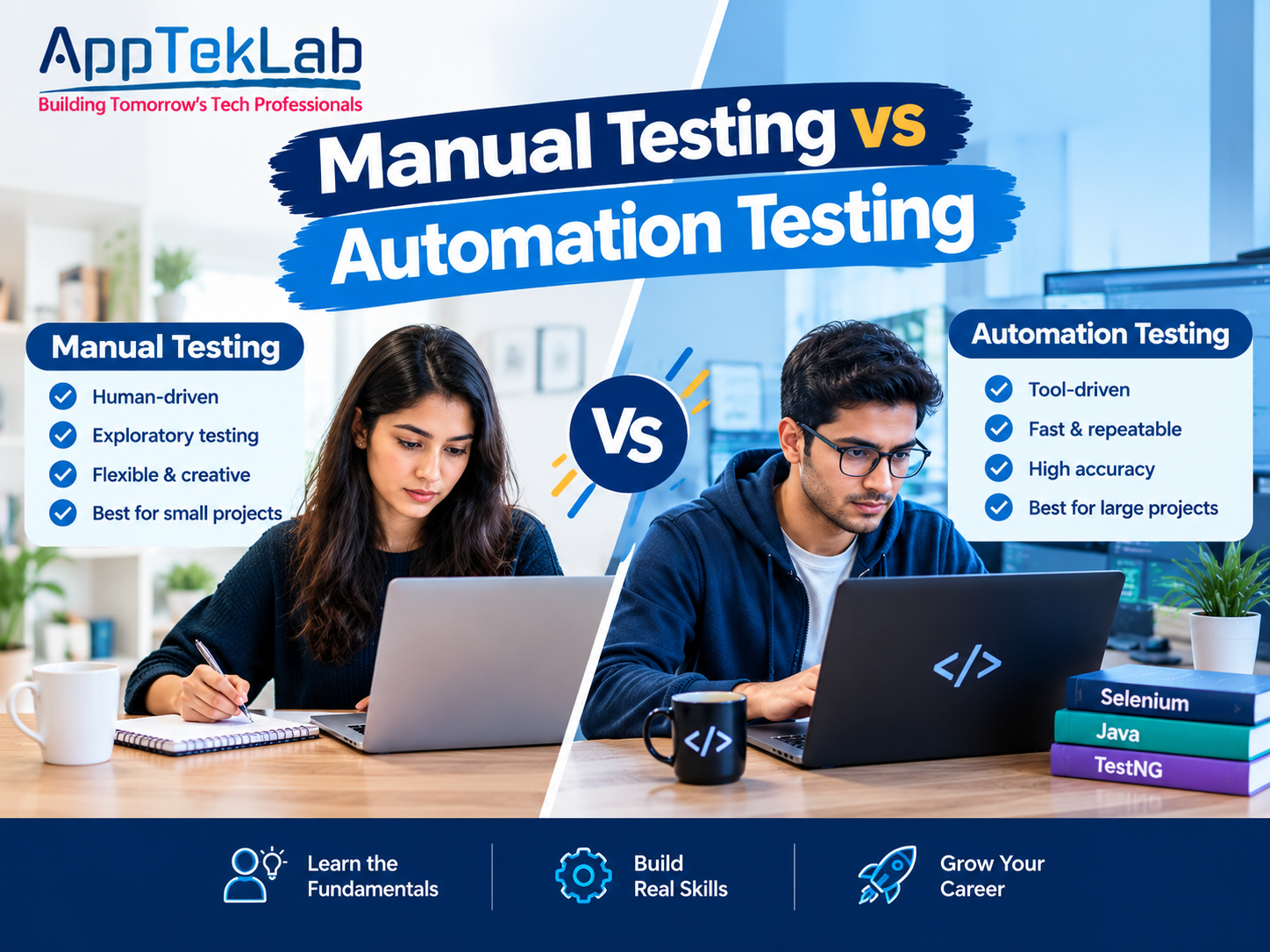
Balancing automated intelligence with human visual deduction remains essential for shipping reliable software, a dynamic explored in our comparison of Manual Testing vs Automation Testing. Similarly, validating how backend architectures withstand heavy concurrent traffic requires structured load checks, detailed in our guide on what is performance testing.
7. The Future of Engineering Skills: Orchestrating Multi-Paradigm AI
As autonomous agents and foundation models absorb repetitive scripting tasks, the role of software developers and QA engineers is evolving rapidly. Modern engineering teams no longer hire specialists solely to write brittle, hardcoded test scripts.
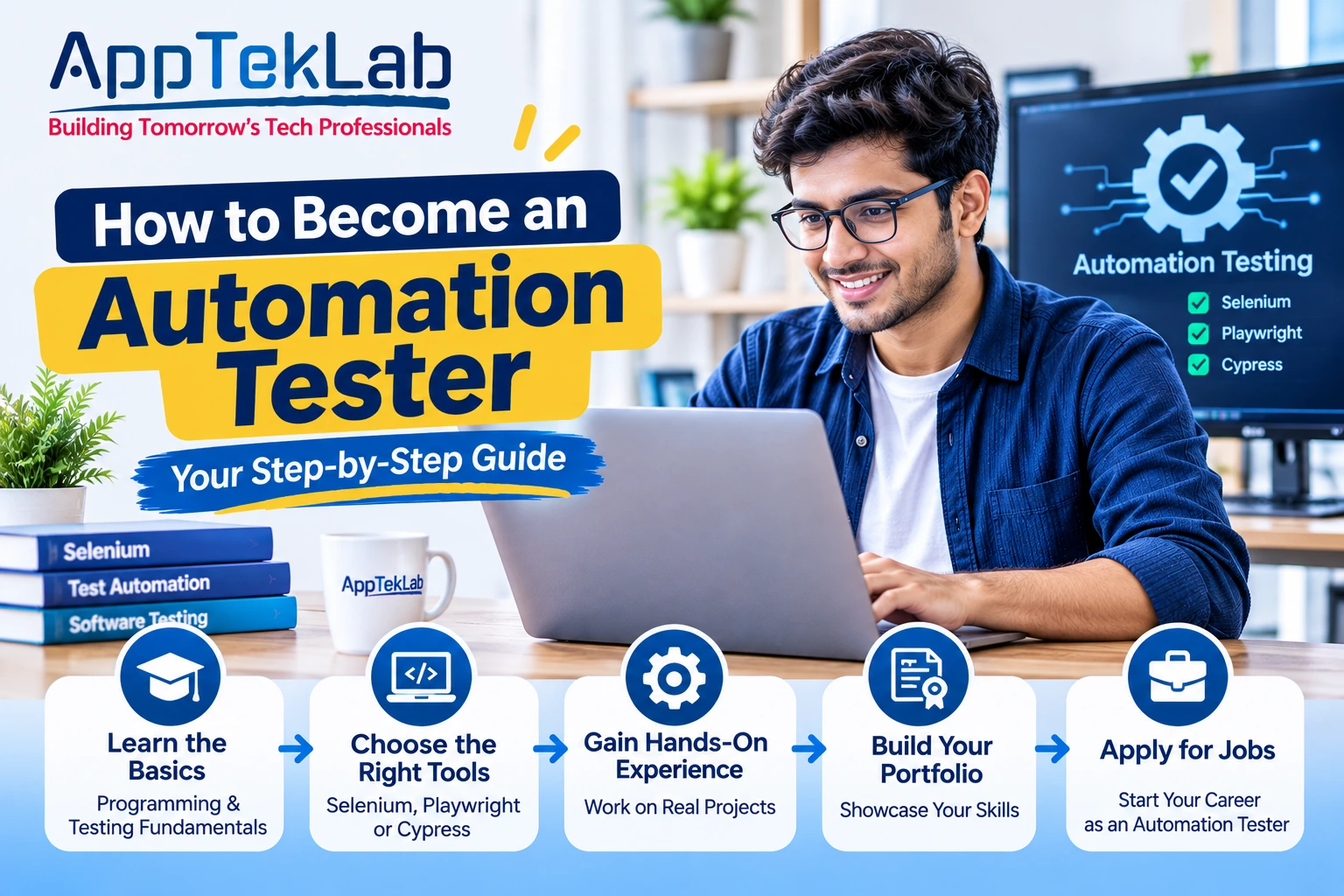
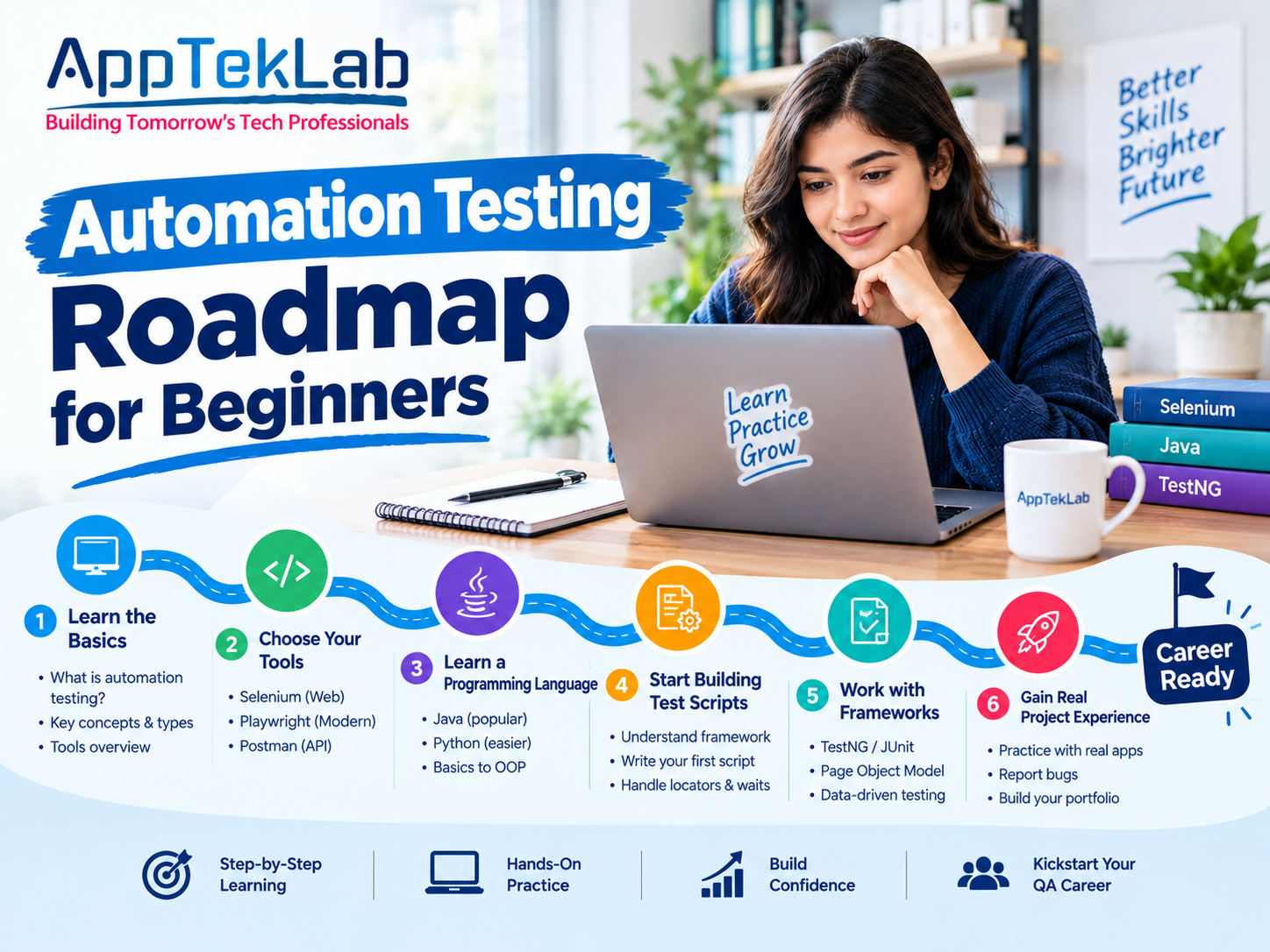
Instead, organizations seek quality architects who understand system design, API protocols, CI/CD pipelines, and AI agent orchestration. Aspiring engineers can build core domain instincts through a structured manual software testing course before progressing through our step-by-step automation testing roadmap for beginners.
4 Guidelines for Choosing the Right AI Approach
Selecting the appropriate AI architecture prevents over-engineering and unnecessary cloud compute expenses:
- Use Traditional AI for Structured Numerical Predictions: When you have clean tabular data and need fast, deterministic forecasting—such as defect risk scoring or latency anomaly detection—traditional ML models are cheaper, faster, and easier to audit than LLMs.
- Use Generative AI for Asset Creation and Summarization: When your team needs rapid test case drafting, boilerplate Playwright code generation, or plain-English log summaries, generative LLMs deliver immediate productivity gains.
- Use Agentic AI for Dynamic Multi-Step Workflows: When tasks require interacting with live software interfaces, adapting to UI changes, chaining stateful API calls, and self-healing without human intervention, deploy agentic architectures.
- Maintain Human-in-the-Loop Governance: Always pair autonomous agents and generative models with deterministic assertions, code reviews, and clear operational guardrails before merging changes into production branches.
Frequently Asked Questions (FAQ)
What is the main difference between traditional AI and generative AI?
Traditional AI analyzes existing data to classify inputs, recognize patterns, or predict numerical outcomes based on predefined rules. Generative AI uses foundation models to create entirely new content—such as source code, natural language text, and synthetic data—in response to prompts.
How is agentic AI different from generative AI?
Generative AI is reactive and single-turn: it generates an output when prompted and requires a human to execute the next step. Agentic AI is proactive and autonomous: it uses reasoning models, memory, and software tools to plan multi-step workflows, interact with live environments, and self-correct errors independently.
Does agentic AI use generative AI under the hood?
Yes. Most modern agentic AI systems use Large Language Models (LLMs) or Small Language Models (SLMs) as their core reasoning and planning engine, combining them with external tool execution (such as browsers and APIs) and persistent memory loops.
Which type of AI is best for software testing?
The best enterprise QA strategy combines all three: traditional AI for predictive test selection and anomaly detection, generative AI for test case synthesis and script drafting, and agentic AI for autonomous end-to-end execution and self-healing UI/API validation.
Master Next-Generation AI and Quality Engineering
Understanding traditional AI vs generative AI vs agentic AI equips engineering teams to deploy the right intelligence at every layer of the software lifecycle. By combining predictive analytics, prompt-driven asset generation, and autonomous testing agents, organizations can ship resilient software at unprecedented speed.
To build hands-on mastery across manual testing fundamentals, modern automation frameworks, and autonomous AI orchestration, explore industry-led software testing courses or browse all courses at AppTekLab to advance your engineering career today.