Software Testing Career Growth: The Complete 2027 Roadmap
The software engineering industry is evolving rapidly, and software testing career growth has transformed from a linear, manual-only ladder into a high-impact, multi-track engineering discipline. Modern enterprises ship updates continuously, meaning quality assurance professionals are no longer viewed as final release gatekeepers—they are core architectural partners.
However, advancing from an entry-level tester to a senior SDET, Quality Architect, or QA Director requires more than years of tenure. It demands deliberate skill compounding across automation frameworks, backend validation, CI/CD pipelines, and autonomous AI orchestration.
This guide maps out the exact career stages, high-leverage technical skills, and leadership transitions that drive long-term advancement in quality engineering. For professionals looking to build structured, job-ready capabilities, enrolling in practical software testing courses provides expert-led mentorship across modern toolchains.
Software Testing Career Growth: 7 Stages From Entry-Level to Principal Architect
Navigating a long-term career in quality assurance becomes much clearer when you understand how responsibilities, technical depth, and compensation scale at each tier.
Below, we break down the seven primary stages and strategic pivots that define modern software testing career progression:
1. Junior QA Engineer: Mastering Core Testing Fundamentals
Every sustainable quality engineering career begins with rock-solid testing fundamentals. At this entry-level stage, your primary focus is understanding the Software Development Life Cycle (SDLC), Software Testing Life Cycle (STLC), and structured defect reporting, as outlined in the ISTQB Foundation Level syllabus.
Key competencies to master include:
- Test Design Techniques: Applying boundary value analysis, equivalence partitioning, and decision tables to uncover edge cases.
- Defect Lifecycle & Triage: Writing reproducible bug reports in tools like Jira and collaborating effectively with developers.
- Domain & User Empathy: Evaluating visual layouts, usability flows, and business logic from an end-user perspective.
If you are entering the field from a non-technical background, completing a dedicated manual software testing course builds the analytical foundation needed before writing automation code.
2. Mid-Level QA Analyst: API Validation, SQL, and Agile Ownership
To break out of entry-level compensation brackets, testers must move beyond front-end browser clicking. Mid-level QA analysts take ownership of end-to-end feature quality within Agile Scrum squads.
At this stage, backend verification becomes your primary differentiator:
- API Testing: Using tools like Postman to validate REST and SOAP endpoints, inspect HTTP status codes, and verify JSON/XML payloads.
- Database & SQL Validation: Writing SQL queries to verify data integrity, check relational schemas, and confirm that UI actions persist accurately in backend tables.
- Shift-Left Participation: Participating actively in sprint grooming and backlog refinement to catch ambiguous acceptance criteria before code is written.
3. Automation Test Engineer: Programming and Framework Architecture
Transitioning into test automation marks the single biggest inflection point in software testing career growth. Organizations prioritize engineers who can eliminate repetitive manual regression bottlenecks through reliable code.
Rather than relying on fragile record-and-playback tools, focus on building modular engineering skills:
- Core Programming: Mastering Object-Oriented Programming (OOP) principles in high-demand languages like Python, JavaScript/TypeScript, or Core Java.
- Modern Web Runners: Designing maintainable Page Object Model (POM) architectures using frameworks like Playwright or Selenium.
- Strategic Balance: Knowing which tests belong in automated pipelines and which require human exploratory scrutiny, a balance detailed in our guide on Manual Testing vs Automation Testing.
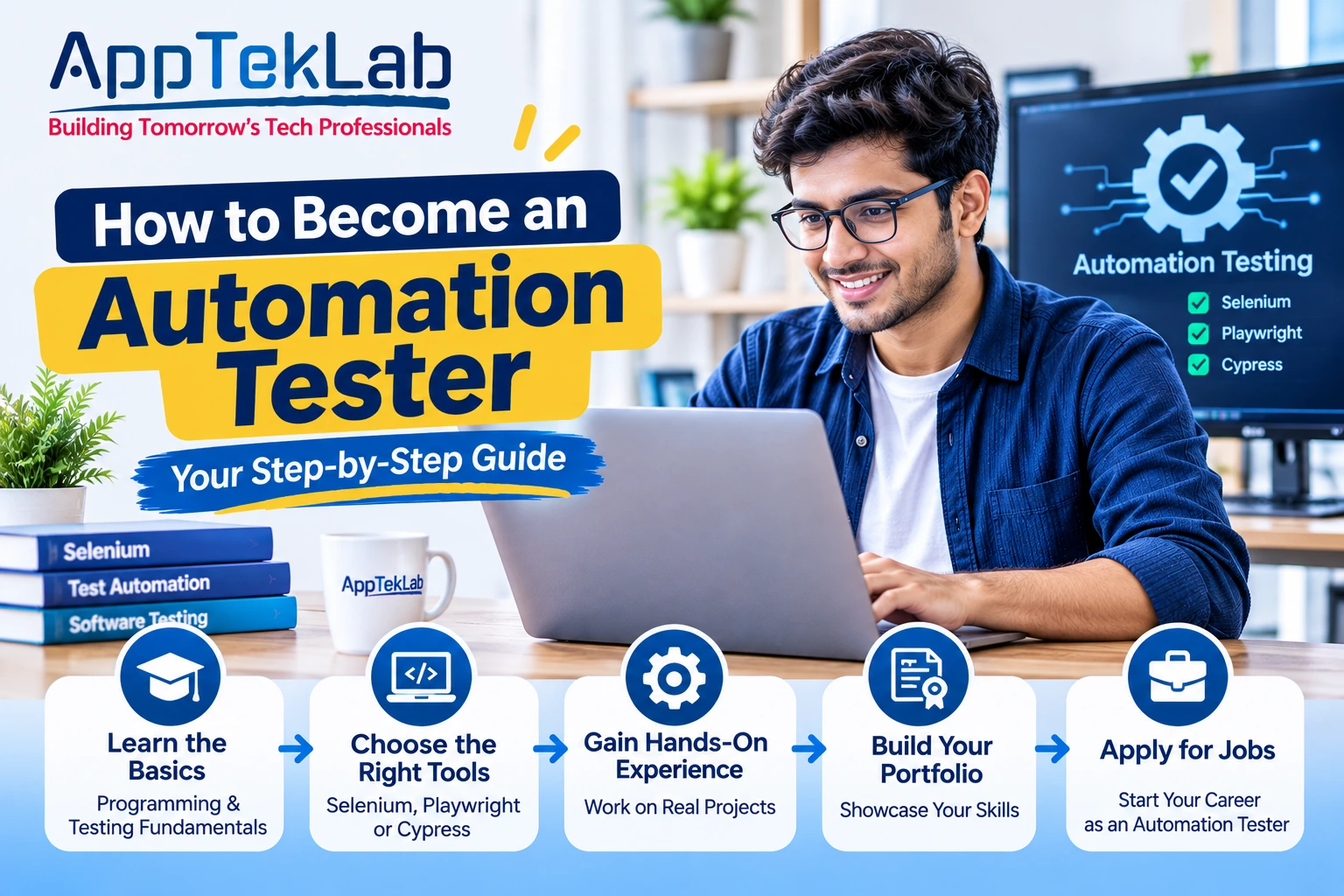
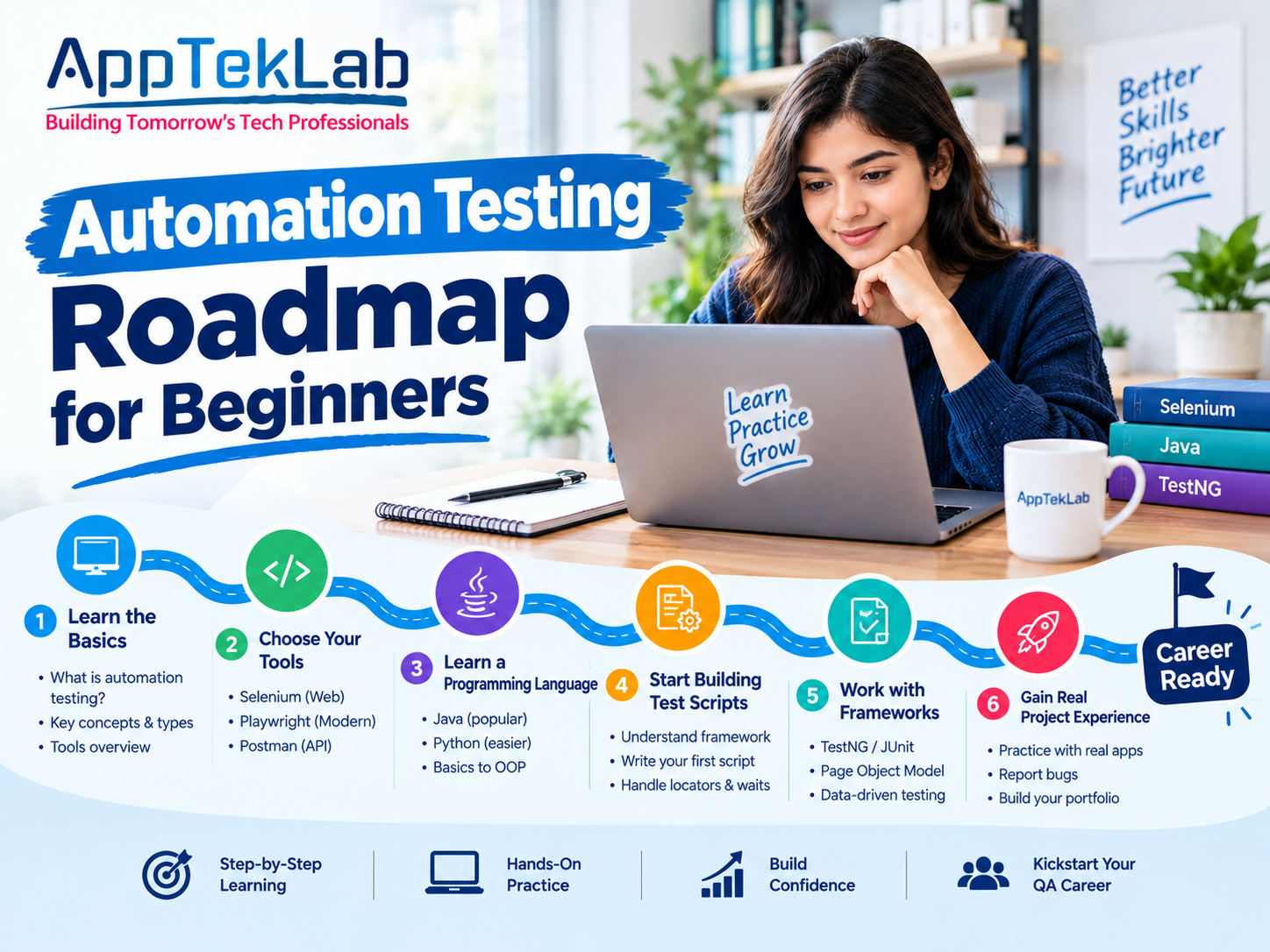
If you are ready to make this technical leap, follow our step-by-step automation testing roadmap for beginners to structure your learning.
4. Software Development Engineer in Test (SDET): CI/CD & DevOps Integration
An SDET operates at the intersection of software development, testing, and DevOps infrastructure. Instead of simply writing individual test scripts, SDETs build the underlying test harnesses, mock servers, and continuous integration gates that empower entire engineering teams.
High-impact SDET responsibilities include:
- CI/CD Pipeline Gating: Integrating automated smoke and regression suites into Jenkins, GitLab CI, or GitHub Actions with parallel container sharding.
- Non-Functional & Load Validation: Ensuring backend microservices withstand peak user traffic, a critical skill covered in our guide on what is performance testing.
- Production Observability: Using monitoring platforms like Splunk, Grafana, or Dynatrace to trace failed pipeline runs back to root-cause server logs.
5. AI-Augmented Quality Engineer: Agentic AI & MCP Orchestration
Modern engineering teams are rapidly phasing out brittle, high-maintenance test suites in favor of autonomous and AI-assisted workflows. Engineers who learn to orchestrate machine intelligence command top-tier market demand.
Forward-looking QA specialists stand out by mastering:
- Self-Healing & Autonomous Execution: Deploying autonomous testing agents that perceive live DOM trees, adapt to UI shifts, and self-heal broken locators.
- Model Context Protocol (MCP) Integration: Connecting automation runners like Playwright with Jira, Confluence, Splunk, and databases via the open-standard Model Context Protocol for context-aware test intelligence.
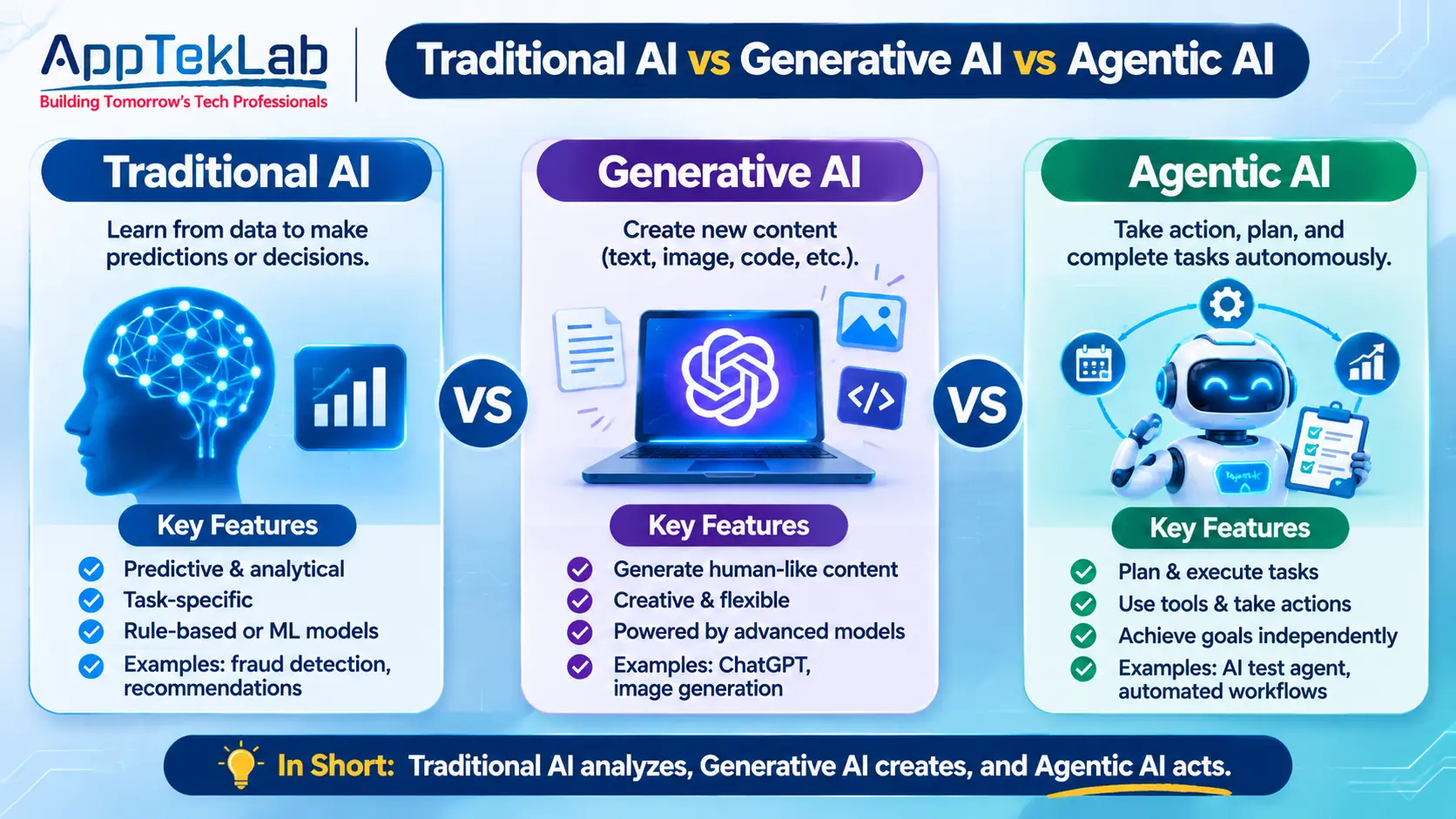
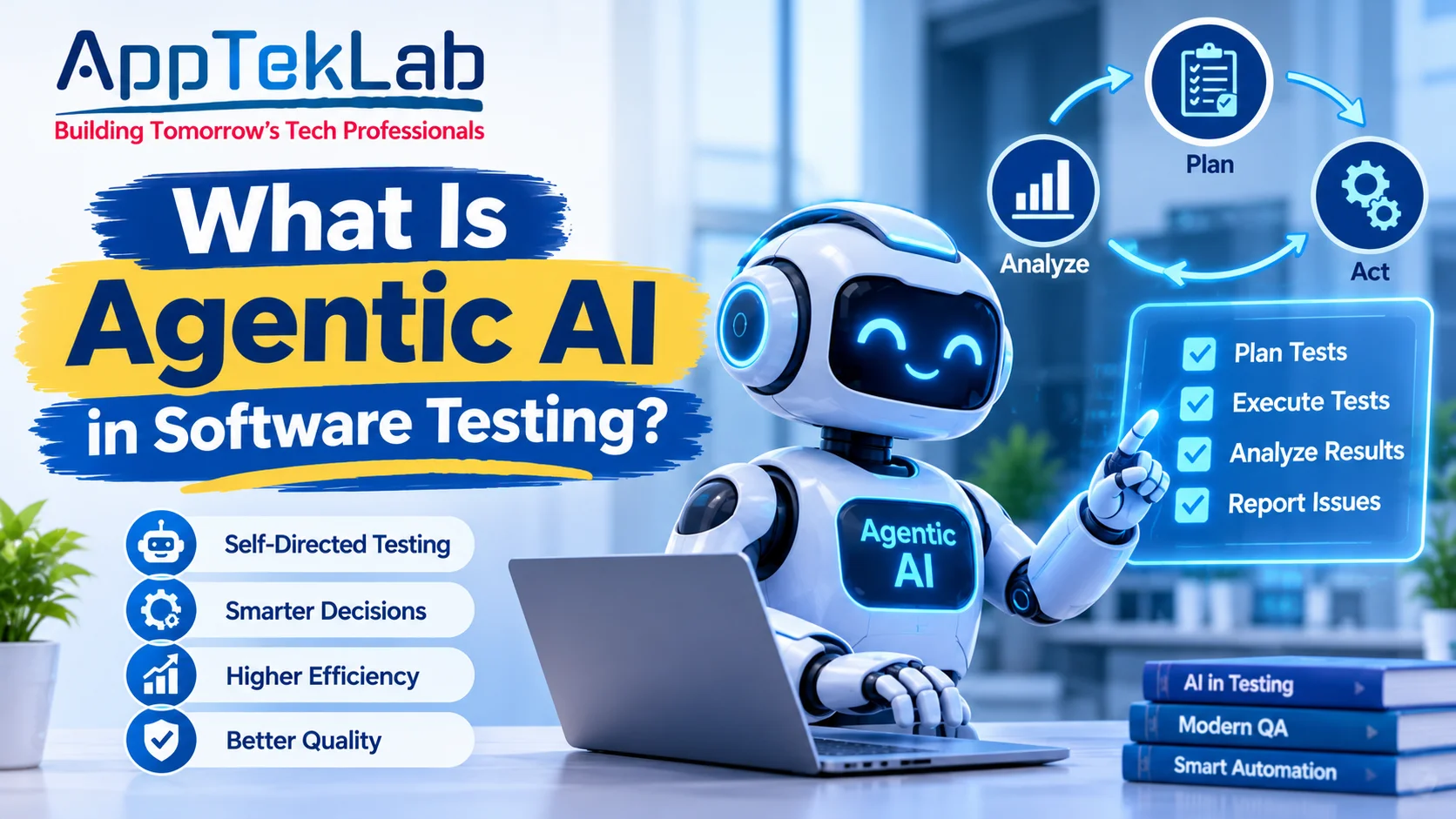
Explore how autonomous agents work in practice through our deep dive on what is agentic AI in software testing, and build hands-on implementation skills with AI-powered software automation testing.
6. Principal Quality Architect: Enterprise Strategy & Governance
At the senior individual-contributor level, a Principal Quality Architect shapes testing standards across multiple product lines and engineering departments. Rather than working inside a single sprint team, you solve organization-wide reliability challenges.
Core architectural deliverables include:
- Designing scalable, cross-platform automation frameworks from scratch for Web, API, and mobile ecosystems.
- Defining enterprise test data management, security compliance, and environment virtualization strategies.
- Mentoring mid-level SDETs and conducting code reviews to enforce clean software engineering patterns across test repositories.
7. QA Lead / Engineering Manager: Technical Leadership & Delivery ROI
For professionals drawn to people leadership, product strategy, and budget ownership, the management track leads from QA Lead to QA Manager and Director of Quality Engineering.
At this executive tier, success is measured by business outcomes rather than test counts:
- Release Readiness & Risk Governance: Making data-driven go/no-go deployment decisions based on defect escape rates, test coverage, and production telemetry.
- Cloud & Tooling ROI: Optimizing test runner infrastructure costs, vendor licensing, and team upskilling budgets.
- Cross-Functional Alignment: Partnering with Product Managers, DevOps Leads, and CTOs to embed quality metrics across the engineering organization.
Software Testing Career Progression Matrix
Comparing roles across technical focus, primary toolchains, and business impact clarifies what it takes to reach the next promotion tier:
|
Career Stage |
Primary Focus |
Core Technical Stack |
Key Promotion Catalyst |
|
Junior QA Engineer |
Manual test execution, bug reporting, STLC basics |
Jira, TestRail, Chrome DevTools |
Mastering structured test design and domain logic |
|
Mid-Level QA Analyst |
End-to-end feature ownership, API & DB checks |
Postman, SQL, Agile/Scrum workflows |
Validating backend data integrity independently |
|
Automation Engineer |
UI/API script development, POM frameworks |
Playwright, Selenium, Python / Java / JS |
Eliminating manual regression bottlenecks via code |
|
SDET |
CI/CD pipelines, parallel execution, observability |
Jenkins, GitLab, Rest Assured, Splunk, Grafana |
Building fast, reliable automated release gates |
|
AI Quality Engineer |
Autonomous testing, self-healing, MCP workflows |
Agentic AI frameworks, MCP servers, LLMs |
Slashing test maintenance overhead with AI agents |
|
Principal Architect / Lead |
Enterprise test strategy, ROI, team leadership |
Multi-framework architecture, cloud grids, KPIs |
Scaling quality standards across multiple squads |
4 High-Leverage Habits to Accelerate Your QA Career
- Treat Test Code Like Production Code: Apply strict software engineering principles—such as DRY (Don't Repeat Yourself), modular design patterns, and clean Git pull request hygiene—to every automation script you write.
- Develop Deep Domain Expertise: Understanding complex business workflows in high-compliance industries like Banking, Finance, Healthcare, or Telecom makes you far harder to replace than knowing a single tool syntax.
- Measure Impact in Business Metrics: When pitching initiatives to leadership, frame your achievements around deployment speed, reduced cloud runner costs, and lower production incident rates rather than raw test case volume.
- Commit to Continuous Technical Upskilling: Tools and frameworks evolve rapidly. Dedicate weekly time to building side projects—such as an open-source Playwright + API framework on GitHub—to demonstrate real architectural capability.
Frequently Asked Questions (FAQ)
Is software testing a good long-term career choice in 2027?
Yes. While isolated manual testing roles have narrowed, demand for multi-skilled Quality Engineers, SDETs, and AI-augmented automation specialists continues to grow as companies increase deployment frequency and adopt complex cloud architectures.
How can a manual tester transition into a high-paying SDET role?
Start by learning SQL and API testing with Postman, then master one core programming language like Python or JavaScript. Build a modular UI and API automation framework using Playwright, push it to GitHub, and configure a basic CI/CD pipeline to showcase practical engineering skills.
Do I need to choose between technical architecture and management to grow?
No. Most modern technology organizations offer dual career tracks: a Technical Track (leading to Senior SDET, Staff Quality Engineer, and Principal Quality Architect) and a Management Track (leading to QA Lead, QA Manager, and Director of Quality Engineering).
How is AI changing software testing career paths?
AI is automating repetitive tasks like boilerplate script generation and brittle selector repairs. As a result, QA professionals are shifting toward higher-value responsibilities, including test architecture, risk analysis, exploratory usability audits, and orchestrating autonomous testing agents.
Take the Next Step in Your Quality Engineering Career
Accelerating your software testing career growth requires combining strong quality assurance fundamentals with modern automation, observability, and AI orchestration skills. Whether you are writing your first test plan or architecting enterprise CI/CD frameworks, every technical layer you master expands your career ceiling.
To explore structured learning paths, hands-on capstone projects, and career-focused mentorship, browse all courses at AppTekLab and start building the next stage of your engineering career today.